Blog
Launch Winning Limited Time Offer Ads
Published May 20, 2026
You've got a product page live, a store theme that looks decent, and enough traffic to prove people are at least curious. But sales still come in unevenly. One day feels promising. The next day is dead quiet. That's the stage where many new store owners start changing everything at once. New creatives, new offers, new targeting, new landing pages.
That usually makes the problem worse.
Limited time offer ads work best when you stop treating them like random discount posts and start treating them like a controlled sales event. The ad angle, the audience, the landing page, and the reminder sequence all need to support the same deadline. If one part is weak, the whole promo leaks money.
For a first campaign, the goal isn't to build the flashiest sale. It's to run a promo that teaches you what makes your buyers move now instead of later. That means using urgency with intent, not noise.
Table of Contents
- Why Limited Time Offers Are Your Secret Weapon
- Decoding the Psychology of Urgency and Scarcity
- Designing Irresistible Ad Creatives and Copy
- Audience Targeting for Maximum Impact
- Your Round-by-Round Ad Testing Playbook
- The High-Converting Landing Page Checklist
- Optimizing Your Campaign After Launch
Why Limited Time Offers Are Your Secret Weapon
It's 6 p.m. on a Tuesday. Your store has had a few add-to-carts, traffic has been uneven all week, and the budget is too tight to keep paying for clicks that never turn into orders. A limited time offer gives that traffic a deadline and gives you a campaign you can manage.
That matters for many founders in their first year. They are usually working with inconsistent traffic, a modest ad budget, and very little room for sloppy testing. A timed offer does more than create a sales bump. It gives you a controlled way to test demand, message fit, and purchase intent under pressure.
The main advantage is structure.
A limited time offer forces decisions across the full funnel. You need one clear offer, one end time, one landing page promise, and a small set of ad angles strong enough to earn the click. That discipline is useful when budget is limited, because scattered campaigns usually burn money before they produce a clear lesson.
For a new store owner, that changes how marketing gets planned:
- You create a revenue event: A real deadline gives you a reason to line up paid ads, email, SMS, social posts, and retargeting around one sales window.
- You learn faster: A short promotion window makes weak messaging easier to spot. You can compare angle against angle, such as FOMO versus social proof, without waiting weeks for a signal.
- You reduce hesitation: First-time buyers often do not need a longer brand story. They need a concrete reason to act before they put the decision off again.
Practical rule: Do not launch a limited time offer because sales feel slow. Launch one because you know the exact action you want the shopper to take before the deadline.
This is also why limited time offer ads are a strong beginner format. They fit a round-by-round testing process. Start with message angles, keep spend contained, send traffic to a page built for the same promise, then expand only after one angle shows it can convert. That is a repeatable system. It is not just a countdown timer pasted onto a weak campaign.
There's another benefit that gets overlooked. Timed promotions expose weak spots fast. If the offer is clear, the deadline is visible, the landing page matches the ad, and the campaign still struggles, the problem is usually somewhere else: the product, the positioning, or the audience.
That kind of clarity is expensive to get through broad always-on advertising. A focused limited time offer can get you there in days.
Decoding the Psychology of Urgency and Scarcity
A shopper clicks your ad at 8:12 PM, likes the product, opens another tab to “come back later,” and disappears. That is the sale most limited time offer campaigns are trying to recover.
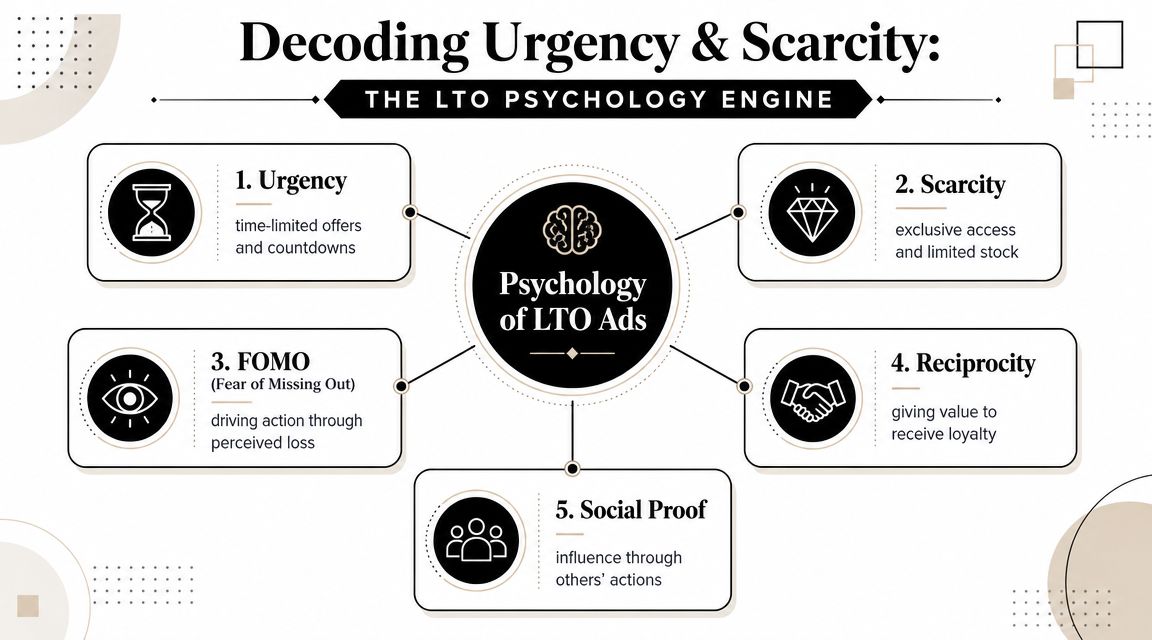
Urgency and scarcity work because they interrupt that delay at the decision point. Urgency answers, “Why buy now?” Scarcity answers, “Why this offer, before it changes?” Used together, they shorten the gap between interest and checkout. Used badly, they look like cheap pressure and hurt trust.
Urgency works when the deadline is concrete
The strongest urgency cue is a real, visible cutoff. “Ends tonight at 8 PM” does more work than “ending soon” because it removes wiggle room. The shopper no longer has to guess how long they can wait.
That only works if the ad and page tell the same story. If your Facebook ad says the sale ends tonight, but the product page hides the deadline below the fold, you create friction right when the buyer is deciding. If you want the click to convert, the timer, banner, headline, and CTA all need to support the same deadline and the same action. Strong call-to-action phrases for time-sensitive offers help here, but only when the offer itself is clear.
For a beginner campaign, keep the urgency setup simple:
- State the exact end time in the ad copy
- Repeat that same deadline on the landing page
- Keep the window short enough to feel different from your normal pricing
- Make the CTA time-aware so the next step feels immediate
Scarcity raises response only when buyers believe it
Scarcity can come from low stock, a limited bonus, a capped bundle, or a short access window. The format matters less than credibility.
Indeed's discussion of limited-time offers points out a trade-off beginner brands often miss. Urgency can increase conversions, but aggressive countdowns and repeated “last chance” language can reduce trust when the offer feels manufactured.
That trade-off shows up fast in e-commerce. A believable stock message can push a hesitant buyer over the line. A fake one can make them question the whole store.
Use a simple credibility check before launch:
- Can you defend the limit? If stock is low, say that. If the bonus ends tonight, remove it tonight.
- Is the scope tight? One product line or one bundle usually feels more believable than a storewide “emergency” sale.
- Does every touchpoint match? Ad, landing page, cart drawer, and reminder email should show the same limit.
- Have you used this exact message recently? If yes, fatigue and skepticism will show up together.
If your store runs a “final hours” promotion every weekend, buyers learn that your deadline is flexible.
FOMO is useful. It is not the whole system.
A common mistake is to rely entirely on fear of missing out. FOMO can work well when the shopper already understands the product and only needs a push. It works less well when the main objection is trust, product fit, or price justification.
That is why strong limited time offer ads are built as angle tests, not just timer tests. One audience may respond to urgency plus social proof. Another may respond to urgency plus a clear problem-solution message. A third may convert better on a value angle, such as a bundle or shipping incentive, because the deal feels practical instead of dramatic.
Here is the practical way to look at it:
- Use FOMO when product awareness is already there
- Use social proof when trust is the blocker
- Use problem-solution framing when the pain point is obvious
- Use reciprocity or bonus framing when the offer needs to feel fair, not pushy
Urgency amplifies the reason to act. It does not create that reason on its own.
That distinction matters for budget. If a new store tests only one “ends tonight” creative, it can misread the result and assume the offer failed. In practice, the timer may be fine, but the angle may be wrong for cold traffic. A better approach is to test urgency across a few message frames, then keep spending only on the one that earns clicks and conversions without forcing the discount deeper.
That is how beginners turn limited time offer ads into a repeatable system instead of a one-off flash sale.
Designing Irresistible Ad Creatives and Copy
Most weak limited time offer ads make the same mistake. They lead with the discount and stop there.
“20% OFF TODAY ONLY” can work, but it usually isn't enough on crowded feeds. Buyers have seen that format too many times. You need a message angle that gives the offer context.
Recent ecommerce ad guidance from Alia Popups on limited-time offer examples argues that the message context can matter more than the discount itself. That's especially important when creative fatigue is high and brands need ads that feel more native and brand-aware.
Start with the angle, not the discount
Before you write headlines, pick the frame.
Here are the most useful angles for beginners:
- FOMO: Best when the shopper already understands the product and only needs a push.
- Social proof: Best when trust is the main obstacle.
- Problem-solution: Best when the product solves an obvious pain point.
- Identity: Best when the buyer wants the product to say something about them.
- Offer-led utility: Best when the deal itself is simple and strong, like a short shipping incentive or bundle bonus.
The strongest ad doesn't always have the biggest discount. It has the clearest reason to care before the timer runs out.
Angle-Tagged Copy Templates for LTO Ads
| Angle | Hook Example | Body Copy Snippet | CTA Example |
|---|---|---|---|
| FOMO | Ends tonight. Don't miss the drop everyone's been waiting on. | If this was sitting in your cart, this is the window to finish the order before the offer expires. | Shop before it ends |
| Social Proof | Best-seller status for a reason. Limited-time deal live now. | Shoppers keep coming back for this one because it solves the core problem fast. The promo just gives you a better reason to try it today. | See why buyers love it |
| Problem-solution | Still dealing with [problem]? Fix it today and save before the deadline. | This product was built to remove the daily friction. The limited-time offer gives you a lower-risk first purchase window. | Solve it now |
| Identity | For shoppers who care how it looks, feels, and performs. Offer ends tonight. | If this product matches how you want to shop, wear, or live, don't wait until the price resets. | Get yours today |
| Utility | Limited-time bonus live now. Short window, simple offer. | No complicated promo. Just a clear deal with a clear end time. Take it while it's available. | Claim the offer |
If you want sharper buttons and headline endings, study a bank of call-to-action phrase examples for ads and landing pages. The CTA is where a lot of decent ads lose momentum.
What the creative should actually look like
The creative format needs to match the angle.
A few practical pairings work well:
- FOMO ads fit bold text overlays, countdown references, and product-first visuals.
- Social proof ads work better with review-style screenshots, UGC-style photos, or “best-seller” framing.
- Problem-solution ads usually perform better when the first frame shows the frustration clearly.
- Identity ads need cleaner design, better styling, and less discount-heavy treatment.
Keep the copy tight. On Meta, the first line matters most. The ad should answer three questions fast:
- What is this?
- Why should I care?
- Why now?
A simple creative stack for a first launch looks like this:
- Ad 1: FOMO angle with deadline in headline
- Ad 2: Social proof angle with trust-led body copy
- Ad 3: Problem-solution angle with a direct pain point
- Ad 4: Plain offer-led version for control
- Ad 5: Native-looking image or UGC-style variant of the best angle
That gives you variety without turning the campaign into a guessing game.
Audience Targeting for Maximum Impact
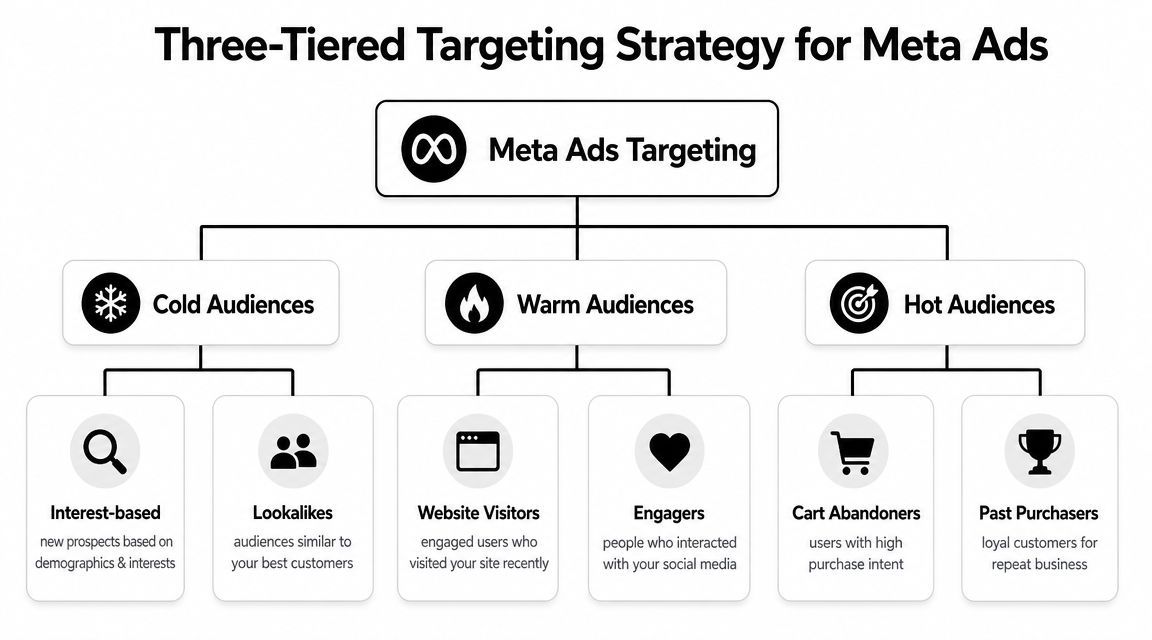
Targeting for limited time offer ads isn't just about demographics. It's about how aware the buyer already is. The more familiar someone is with your store, the harder you can lean into urgency.
Segmentation matters here. LocaliQ's guidance on limited-time offers emphasizes that the offer should have a clear timeframe and that marketers should tailor the promotion to each cohort instead of blasting one generic message to everyone.
Match the message to audience temperature
Cold audiences don't know you yet. They need a reason to click that feels low risk. Don't hit them with pure panic messaging. Lead with product value, then support it with a short-term offer.
Good cold messaging:
- Problem-solution
- Identity
- Best-seller framing
- Soft urgency with a clear deadline
Warm audiences already engaged. They visited the site, watched the video, or interacted with your content. They usually need reinforcement, not a full education.
Good warm messaging:
- Social proof
- FOMO
- Reminder-style creatives
- “Still thinking about it?” style copy
A lot of stores also need a cleaner approach to audience definitions. If you're fuzzy on who belongs in each bucket, this guide to demographic targeting for ad campaigns helps tighten the basics before you build retargeting layers.
Later in the funnel, use a different push.
Hot audiences are where urgency has the most force. These are cart abandoners, product viewers, and people who started checkout. They've already shown intent. Your job is to remove delay.
Good hot messaging:
- “Ends tonight”
- “Your offer expires soon”
- Cart reminder plus deadline
- Product-specific urgency
A simple way to structure the campaign
You don't need a giant account structure. Keep it lean.
| Audience tier | Who's in it | Best angle | Offer intensity |
|---|---|---|---|
| Cold | Interests, broad prospecting, lookalikes | Problem-solution or identity | Moderate |
| Warm | Site visitors, engagers, video viewers | Social proof or reminder | Stronger |
| Hot | Cart abandoners, checkout starters, recent product viewers | FOMO and deadline-led | Strongest, shortest |
Segment by intent first. Age and interests matter, but intent decides how much urgency the buyer will tolerate.
The common mistake is showing the same “Ends tonight” ad to everyone. Cold traffic often ignores it. Hot traffic often responds to it. The difference isn't the ad. It's the buyer's stage.
Your Round-by-Round Ad Testing Playbook
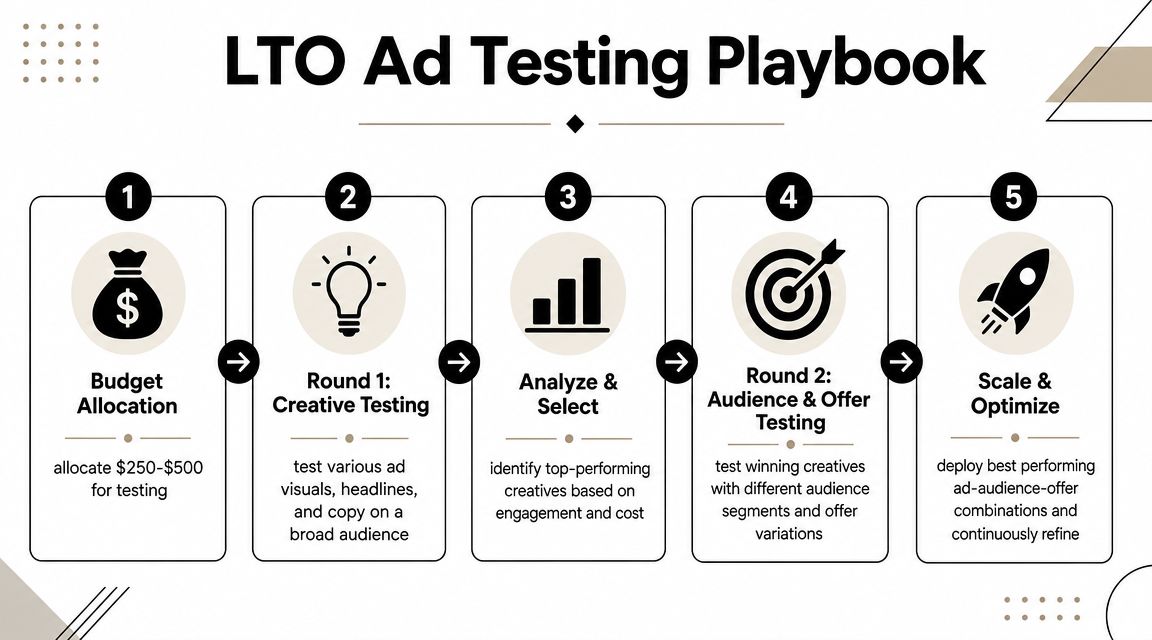
Testing limited time offer ads gets expensive when beginners test everything at once. New headline, new audience, new offer, new landing page, all launched on the same day. Then nothing is clear.
A better approach is simple. Test one variable at a time.
The campaign should also stay tight. Mailchimp's lightning-sale guidance recommends a short, high-intensity promotion window of around 3 hours, supported by countdown timers and multi-channel promotion. That same guidance warns that overexposure reduces urgency and trains buyers to wait.
Round 1 tests the message
Start by holding the audience mostly steady and testing creative angles.
If your testing budget is limited, keep the setup narrow:
- Pick one offer
- Use one landing page
- Choose one broad or prospecting audience
- Launch 3 to 5 creatives with different angles
A practical first batch:
- FOMO creative
- Social proof creative
- Problem-solution creative
- Plain offer creative
- Native-looking variation of the strongest concept
What you're looking for in Round 1:
- Which ad gets attention fastest
- Which copy frame earns clicks without looking spammy
- Which angle matches the product best
Don't rewrite the whole campaign halfway through the first run. Let the early data tell you which angle deserves a second look.
Round 2 tests who should see it
Once one angle stands out, stop spreading budget across every idea. Move that winning creative into audience testing.
Now compare where it works best:
- Broad prospecting
- Interest cluster
- Lookalike
- Warm retargeting
- Hot retargeting
Many first-time advertisers eventually recognize this pattern. A creative that looks average in prospecting can become strong in retargeting because the audience already understands the product. The reverse also happens. Some ads hook cold traffic well but don't convert warm traffic because the message is too introductory.
A clean way to run Round 2:
- Keep the winning ad mostly unchanged
- Duplicate into separate audience groups
- Keep the offer and page constant
- Compare audience response, not creative changes
Field note: If you change the ad and the audience at the same time, you won't know what actually improved.
What to avoid during testing
A few mistakes ruin limited time offer testing fast:
- Running the sale too long: The offer starts feeling normal.
- Adding too many SKUs: The ad clicks, then the landing page becomes a scavenger hunt.
- Testing multiple discounts at once: You won't know if buyers wanted the product or just the cheaper price.
- Using the same urgency message for every audience: Relevance drops.
For beginners, discipline is more valuable than complexity. A tight test with a clear deadline usually teaches more than a broad campaign with endless variables.
The High-Converting Landing Page Checklist
A limited time offer ad can do its job and still lose money if the landing page doesn't confirm the offer immediately. The page has to finish the sale the ad started.
That means one thing above all else. Message match.
If the ad says the offer ends tonight, the landing page needs to say the same thing without making the shopper hunt for it. If the ad pushes a specific product angle, the page shouldn't open with generic brand copy.
What must appear above the fold
The first screen should confirm four things:
- The exact offer
- The exact deadline
- The product benefit
- The path to buy
If any of those are missing, shoppers start drifting.
A lot of store owners spend hours on ad creative and then send traffic to a product page with no visible timer, a weak add-to-cart button, and buried reviews. That's expensive. Before launch, compare the page against solid landing page best practices for paid traffic.
The pre-launch checklist
Use this before you spend a dollar.
- Mirror the offer headline: The page headline should reflect the ad promise closely.
- Show a visible countdown: Put it near the product title, price, or CTA area.
- Keep the CTA obvious: The add-to-cart button should stand out on mobile and desktop.
- Surface trust quickly: Reviews, star ratings, testimonials, or UGC should appear early.
- Cut extra navigation if needed: During a promo, too many exits reduce focus.
- Check mobile spacing: Most paid traffic will judge the page on a phone.
- Confirm the cart reflects the offer: Nothing kills trust faster than a discount that disappears in checkout.
One more rule matters. Don't send limited-time traffic to a page that still feels unfinished. Short promos magnify page problems. A normal campaign might survive weak spacing or unclear benefit copy. A deadline campaign usually won't.
Optimizing Your Campaign After Launch
Once the campaign is live, stop making emotional decisions. Use simple rules.
A strong launch usually needs small adjustments, not constant rebuilding. Check the pattern between the ad and the page.
Use simple if-then rules
- If clicks are coming in but carts stay weak, check the landing page match. The offer may be clear in the ad and vague on the page.
- If warm and hot audiences respond but cold traffic doesn't, your creative may rely too heavily on urgency and not enough on product explanation.
- If one angle gets attention but weak purchase intent, keep the angle and rewrite the body copy to improve relevance.
- If the campaign starts strong and fades fast, creative fatigue or overexposure may be setting in. Rotate the angle, not just the colors.
- If hot retargeting works best, shift more attention to cart recovery and reminder flows instead of forcing more top-of-funnel spend.
Handle the final hours differently
Limited-time promotions now work best as coordinated follow-up systems, not just ad campaigns. Drip's ecommerce guidance on limited-time offers notes that about 70% of online shopping carts are abandoned before checkout, which is why brands use layered follow-ups like countdown emails, SMS reminders, exit-intent popups, and retargeting. The same source says SMS open rates hover around 98%, which makes it especially useful for final-hour pushes.
That changes how you should close the campaign:
- Send a last-chance email to non-buyers
- Trigger SMS in the final window for opted-in shoppers
- Tighten retargeting copy to the exact deadline
- Update on-site banners from general promo language to direct expiry language
In the final hours, clarity beats creativity. Buyers don't need a clever campaign. They need to know exactly what ends, when it ends, and where to finish checkout.
If you want a faster way to plan limited time offer ads without guessing at angles, creatives, audience segments, or landing page fixes, Social Loop AI helps turn a product URL into a practical Meta ads launch plan. It's built for first-time ecommerce owners who need brand-aware creatives, a round-by-round testing structure, and landing page guidance without hiring an agency.