Blog
10 Places Where to Advertise My Business for Free in 2026
Published June 25, 2026
You launched the store. The product page is live. Your checkout works. Then you open analytics and see the number every new seller hates: almost no visitors.
That's the point where most beginners make the same mistake. They assume the next step is paid ads. It usually isn't. Before you spend anything, you need proof that strangers will click, engage, ask questions, and ideally buy. Free traffic won't scale forever, but it will show you whether your offer has any life in it.
If you're asking where to advertise my business for free, the actual answer isn't “everywhere.” Spreading yourself across ten channels with weak effort gets you ten weak results. A better move is to use the right free channels in the right order, with formats that fit each platform.
This guide is built for dropshippers and new ecommerce owners who need practical traction, not abstract branding advice. Some channels are great for searchable intent. Some are better for community trust. Some are useful mainly because they force you to sharpen your offer and creative.
One more hard truth before the list: traffic doesn't fix a bad destination. Existing free advertising guides rarely address landing page readiness, even though Social Loop AI's industry data, based on 19,000+ winning Meta ads, says 70% of new dropshippers fail because the landing page isn't ready, and pages with CTR scores below 60 lead to 3x higher ad spend waste. Free traffic helps you validate interest. It won't rescue a confusing product page, weak images, or a vague offer.
Here's the roadmap I'd use to get first clicks without paying for ads.
Table of Contents
- 1. Google Business Profile
- 2. Social Media Marketplaces & Groups
- 3. Pinterest Business Account
- 4. Reddit
- 5. TikTok & Instagram Reels
- 6. LinkedIn Personal Profile & Company Page
- 7. YouTube Channel & Shorts
- 8. Email Signature Marketing
- 9. Guest Posting on Niche Blogs
- 10. Collaborate with Micro-Influencers
- Top 10 Free Advertising Channels Comparison
- From Free Channels to Scalable Growth What's Next
1. Google Business Profile
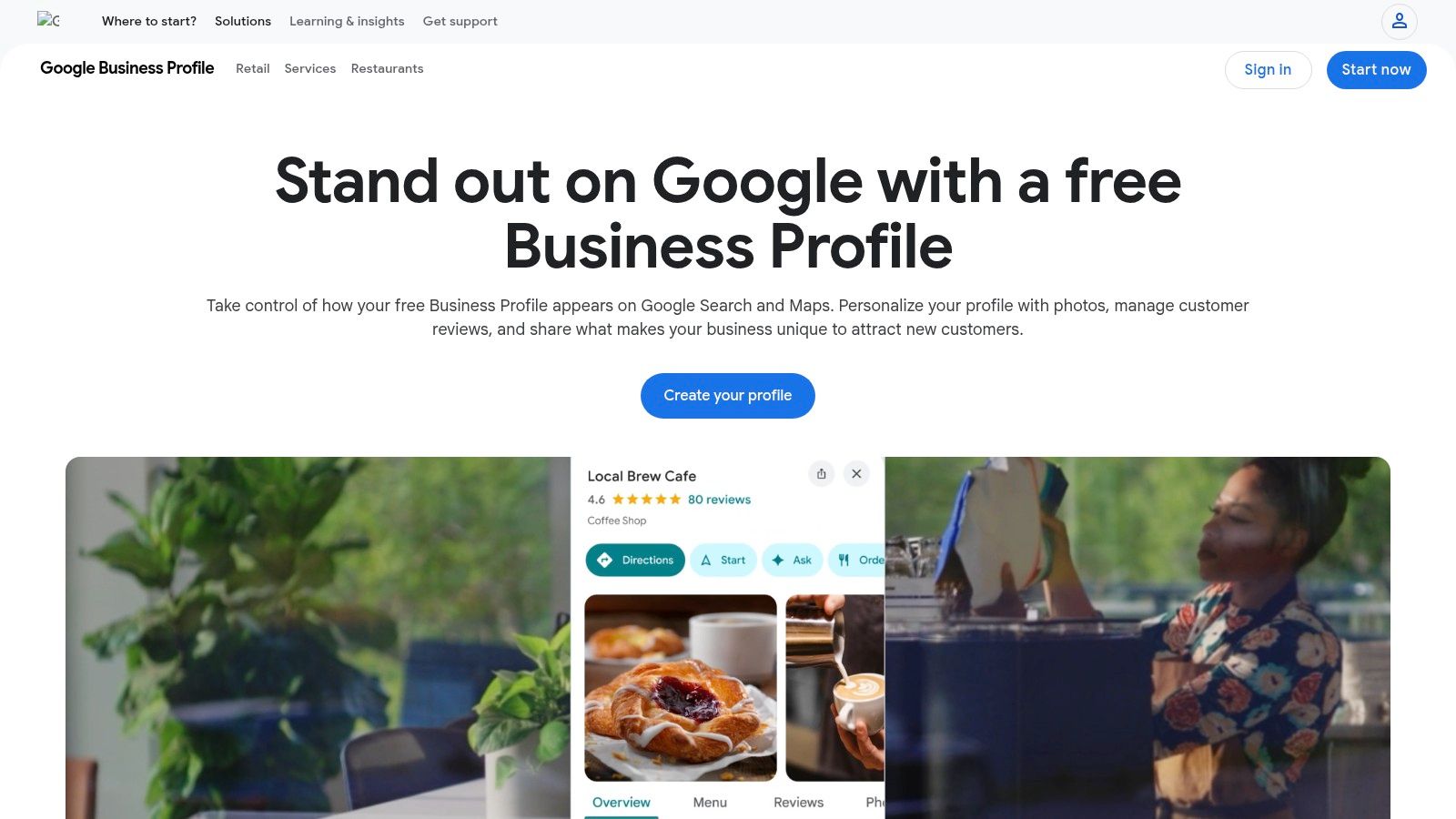
If you only set up one free channel this week, make it your Google Business Profile. It's still the most important free visibility asset for a small business because Google is where people look when they're already trying to solve a problem.
As of 2025, 81% of consumers use Google to search for local businesses each week, and 76% of those users visit a physical store or contact the business within 24 hours. That matters even if you're a dropshipper, because buyers still Google brand names, policies, and legitimacy before they trust a store they've never seen before.
Why it punches above its weight
A profile gives you a branded search result, a place for photos, Q&A, updates, and a trust layer that most new stores badly need. It's not just for brick-and-mortar shops. If your business is eligible, it can still support credibility, especially as consumers look for your store name after seeing a post somewhere else.
The biggest mistake is treating the profile like a one-time setup. It works better when you add real product images, clear categories, your site link, and short updates tied to launches or offers.
Practical rule: Don't write generic updates like “Check out our store.” Post one product, one use case, one reason to click.
Quick start checklist
- Claim and verify it: Finish the setup completely. Half-built profiles look abandoned.
- Add buying context: Use your description to explain what you sell, who it's for, and why your store is different.
- Upload proof: Add product photos, packaging shots, and anything that makes the business feel real.
- Post a short update: Try copy like: “New arrival for small apartments. Our foldable desk lamp is now live with a compact design and clean cable setup.”
- Answer your own common questions: Shipping times, return policy, and product fit are common friction points.
For dropshippers, this channel is less about “going viral” and more about not losing trust at the final moment. When someone searches your brand after seeing a Reel or a Reddit comment, this profile helps close the doubt gap.
2. Social Media Marketplaces & Groups
For raw audience size, Facebook still matters. The platform had an estimated 2.89 billion monthly active users as of Q4 2024, which is why it remains one of the few free places where almost every niche already has a community.
But volume alone isn't the reason to use it. Facebook groups and Marketplace work because they let you drop into existing demand. A camping gear group, a dorm essentials group, a local moms group, or a small pet-owner group can outperform a broad public post if your product fits the conversation.
What works in groups and what gets ignored
Most new sellers join groups and start posting product links. That usually gets deleted, ignored, or both. The better play is to earn relevance first.
If you sell a posture cushion, don't open with “buy this.” Open with a comparison post, a setup photo, or a short answer to a real question. Then mention the product naturally if the group rules allow it. If you need content angles, this roundup of social media post ideas is useful for turning one product into multiple non-spammy formats.
A Marketplace listing is different. There, directness helps. Clear product photo, plain title, short benefit, and a friction-reducing description usually beat clever branding.
Groups reward contribution. Marketplace rewards clarity.
Quick start checklist
- Join small relevant groups first: Niche beats huge.
- Read the rules before posting: Many groups allow education, reviews, or problem-solving posts, but not direct links.
- Use a human-first format: “I tested three under-desk cable organizers in a tiny workspace. This was the cleanest setup.”
- Write Marketplace titles like search terms: “Foldable laptop stand for small desk” beats a brand-only title.
- Reply fast in Messenger: Free traffic dies when questions sit unanswered.
If you're wondering where to advertise my business for free and need immediate conversations, this is one of the fastest channels. It's also one of the easiest to misuse.
3. Pinterest Business Account
A free Pinterest Business account is one of the best channels for visually clear products that solve obvious problems. Home decor, storage, beauty, fashion, kitchen tools, printables, gifting, and DIY-adjacent products tend to fit naturally.
Pinterest isn't a conversation platform first. It's a discovery engine. That changes how you should use it. You're not trying to “post updates.” You're trying to publish assets that people can find later when they search for a problem, style, or idea.
Why Pinterest is different from regular social posting
Most guides lump Pinterest in with social media, but that misses the point. A 2024 analysis found Pinterest's ad reach in the UK grew by 78%, which highlights how much attention is moving through the platform. What matters for free promotion is that Pinterest is one of the few channels where discovery is still strongly search-driven.
That makes it especially useful for dropshippers selling products with a visual payoff. Think “before and after desk setup,” “small bathroom organizer ideas,” or “capsule wardrobe accessories.” Those formats age better than a standard social post.
Quick start checklist
- Switch to Business: You'll get analytics and better publishing tools.
- Create pins around search intent: Use titles like “Tiny kitchen storage idea” or “Travel makeup organizer for carry-on.”
- Make the image do the selling: Show the product in use, not just on white background.
- Add text overlay carefully: Short, readable, and benefit-led.
- Link each pin to the matching page: Don't send every pin to your homepage.
Example pin format:
- Title: “Under-sink organizer for cramped bathrooms”
- Overlay text: “Stop wasting cabinet space”
- Description: “A compact organizer that keeps cleaning supplies upright and easy to reach.”
Pinterest is slow compared with TikTok. That's also why it's valuable. One good pin can stay useful far longer than a throwaway social post.
4. Reddit
Reddit can send highly qualified traffic, but only if you respect the culture. If you treat it like a billboard, you'll get buried. If you treat it like a discussion board full of skeptical people with good radar, you can get useful clicks and blunt product feedback.
The best use case is simple. Your product fits a specific hobby, pain point, or identity-based niche. Reddit has communities for all of those.
How to avoid getting treated like spam
Use Reddit as an answer platform first. Comment on posts where people are already discussing the exact problem your product solves. If someone asks how to organize cables in a tiny apartment setup, a thoughtful answer with real detail is stronger than a new post announcing your store.
Transparency matters. If your affiliation is relevant, say it. People on Reddit usually react better to honest disclosure than polished marketing language.
Field note: Reddit traffic is often smaller than social traffic, but the intent can be much better because the person was already looking for a solution.
Quick start checklist
- Find subreddits by problem, not just product: A posture corrector might fit productivity, home office, fitness, or chronic pain discussions.
- Build a little history first: Leave useful comments before sharing anything from your store.
- Lead with what you learned: “I tested three ways to keep pet hair off car seats. This worked best in a hatchback.”
- Use soft CTAs: Mention the product only if it adds value to the answer.
- Save winning comments: If one reply gets traction, turn it into copy for product pages or future posts.
An example post opener that tends to work:
- Post format: “I kept seeing people ask how to stop necklaces tangling during travel. I compared pouch, hard case, and compartment organizer options. Here's what worked.”
Reddit won't hand you easy volume. It will tell you very quickly whether your product claim sounds believable.
5. TikTok & Instagram Reels
Short-form video is still the fastest free way to test whether a product can stop the scroll. TikTok and Instagram Reels are where weak offers get exposed fast, but they're also where simple products with a clear payoff can find traction quickly.
This channel works best when you stop trying to look like an ad. New sellers often over-edit, over-brand, and over-explain. Native-looking clips usually perform better than polished promo videos.
The format that usually works best
Use a hook tied to a visible problem. Then show the product solving it within the first few seconds. A sink splash guard, a car seat gap filler, or a compact blender all need to be shown in action immediately.
What doesn't work well is a brand intro, logo animation, or generic lifestyle montage. People need to understand the use case before they care who you are.
“This is the product” is weak. “This stopped my charger cables falling behind the desk” is stronger.
Quick start checklist
- Open with the problem: “If your cords keep sliding behind your desk, try this.”
- Keep clips tight: Show setup, use, and result.
- Record multiple angles: Hands, close-up, before/after, reaction.
- Use plain captions: Make the takeaway obvious even on mute.
- Send viewers somewhere specific: Product page, bundle page, or waitlist page.
Three beginner-friendly Reel ideas:
- Problem-solution clip: Show the mess, then the fix.
- POV demo: “POV: your carry-on finally fits your beauty routine.”
- Expectation vs reality: Compare cheap alternatives with your product setup.
If you need free traffic fast, this belongs near the top of your list. Just don't confuse views with proof. Saves, profile clicks, comments, and site visits matter more than vanity metrics.
6. LinkedIn Personal Profile & Company Page
LinkedIn is the odd one on this list. It's rarely the best place to drive direct consumer sales for a typical impulse product. It can still be useful if you sell to professionals, office buyers, founders, or people who care about the business story behind the brand.
Use LinkedIn mainly to build trust, document progress, and create useful relationships. For ecommerce founders, the personal profile usually does more work than the company page.
Where it fits and where it doesn't
If you sell ergonomic desk gear, productivity tools, gifting products for teams, or B2B-friendly items, LinkedIn can fit. If you sell novelty gadgets, beauty impulse buys, or trend-heavy fashion, it's probably not your first move.
The company page is mostly a credibility layer. The personal profile is where reach and conversation tend to happen. Founder posts about lessons learned, product iteration, customer feedback, or packaging changes can attract partners, creators, and other operators.
Quick start checklist
- Clean up your headline: Say what you sell and who it helps.
- Post the build-in-public angle: Share the product journey, not just offers.
- Use product photos with context: Show the use case in a workspace, shipping desk, or customer setting.
- Add the company page anyway: It helps when someone looks you up.
- Connect with adjacent people: Suppliers, creators, retail consultants, freelance designers.
Example post format:
- Opening line: “We cut three confusing product claims from our store this week after watching where visitors dropped off.”
- Body: Share the lesson, what changed, and what you learned.
- Close: Invite opinions or experience.
LinkedIn won't replace your discovery channels. It can make the business look more real, which matters when buyers, partners, or creators check you out.
7. YouTube Channel & Shorts
YouTube is where a lot of free traffic gets underestimated because it feels slower at the start. That's a mistake. Searchable video is one of the few assets that can keep sending relevant visitors long after you upload it.
Not all free channels are searchable. Many social platforms bury your content unless you already have followers or pay for distribution. YouTube is different. Along with Google Business Profile, it's one of the strongest options for organic search visibility around product-specific queries.
Why YouTube matters more than most beginners think
If someone searches “how to organize makeup in a small bathroom” or “best way to pack jewelry for travel,” a useful video can keep getting discovered. Shorts help with reach. Longer videos help with trust.
You don't need a studio. You need clear audio, decent lighting, and a useful angle. Product reviews, side-by-side comparisons, setup tutorials, and “3 mistakes people make with X” all work better than generic brand trailers.
Quick start checklist
- Start with searchable titles: Use phrasing people type.
- Film one long video and cut Shorts from it: This saves time and multiplies output.
- Show hands-on proof: Unboxing, setup, demo, and result.
- Put the link where people can find it: Description, pinned comment, channel links.
- Keep the promise tight: If the title says “small desk cable fix,” show that fast.
Try these formats:
- Tutorial: “How I stopped cords tangling under a standing desk”
- Comparison: “Pouch vs case vs insert for travel jewelry”
- Short: 20 to 40 seconds showing the problem and fix
If your product solves a specific problem people search for, YouTube is one of the best answers to where to advertise my business for free.
8. Email Signature Marketing
This one is boring. It also works more often than people expect.
Every email you send to suppliers, customers, creators, freelancers, app support, and business contacts is a small ad unit. A clean signature built with a tool like HubSpot's email signature generator can push people toward a product, launch, or lead magnet without extra effort.
The small channel that keeps compounding
Email signature marketing won't create a flood of traffic. That's not the point. It puts an offer in front of warm or semi-warm contacts who already know your name from a real conversation.
Keep it simple. One line. One link. One reason to click. If you need help with short outreach language, this guide to a sales introduction email template is a useful reference for keeping your message concise.
Quick start checklist
- Use one CTA only: Don't stack store link, Instagram, TikTok, and five badges.
- Match the CTA to your current goal: New product, sample request, waitlist, or bestseller.
- Keep it plain-text readable: Many signatures break on mobile.
- Change it monthly: Rotate based on what you're pushing.
- Track with a dedicated link if possible: You want to know if anyone clicks.
Example signature CTA lines:
- Product launch: “New: compact desk organizer for small workspaces”
- Seasonal angle: “Travel jewelry case now back in stock”
- Trust builder: “See our best-rated organizer collection”
This channel is easy to set and easy to forget. Set it once, update it regularly, and let it do quiet work in the background.
9. Guest Posting on Niche Blogs
Guest posting is slower than posting on social, but it's one of the better ways to borrow trust from an established audience. If you write for a site your buyers already read, you don't need to fight for attention from zero.
The key is to pitch information, not promotion. A niche blog wants useful content for its readers. Your store link is the byproduct, not the pitch.
How to pitch without sounding self-promotional
Use Ahrefs' guest blogging guide for a basic framework, then tailor your idea to the audience. If you sell kitchen organization products, don't pitch “why our product is great.” Pitch “small kitchen storage mistakes renters make” or “how to store cleaning tools in a narrow cabinet.”
The stronger your topic matches the blog's reader intent, the more likely the post gets accepted and clicked. For a solid overview of how written content supports store growth, this guide to content marketing and blogging is worth reviewing.
A guest post should make sense even if your store link were removed. That's the standard.
Quick start checklist
- Build a target list: Find blogs, newsletters, and niche publications your buyers already trust.
- Pitch one strong topic, not your biography: Editors care about reader value.
- Include proof of writing ability: Even a strong blog post from your own site helps.
- Write the author bio for clicks: State what you sell and who it helps.
- Link to a relevant page: Collection, guide, or product category beats a generic homepage.
Example pitch idea:
- Subject: Guest article idea for small apartment readers
- Angle: “7 storage mistakes that make a tiny bathroom feel even smaller”
This method takes more work than posting a Reel. The traffic is usually more qualified, and the credibility lasts longer.
10. Collaborate with Micro-Influencers
Product seeding is one of the most practical free-ish channels for ecommerce. I'm calling it free because you're usually trading product, not buying media, but it still has a cost. Don't pretend otherwise. Samples, shipping, and time all count.
Still, for many stores, sending product to the right small creator is a better early move than paying for ads too soon. Shopify's product seeding overview covers the mechanics. The important part is choosing creators whose audience already matches the product.
How to seed products without wasting samples
Don't chase follower count first. Look for fit. A creator with a small but relevant audience can produce better UGC and better trust than a much larger account with loose alignment.
Also, don't ask for a polished ad right away. Ask for honest use, honest feedback, and permission to reuse good content if they create it. That lowers pressure and often leads to more natural posts.
Quick start checklist
- Pick creators by audience match: A travel organizer belongs with frequent travelers, not generic lifestyle pages.
- Study their content first: Would your product look natural in their feed?
- Keep outreach short: Mention why the fit makes sense.
- Offer a clear exchange: Free product, no script, honest feedback welcome.
- Track who delivers usable content: UGC reuse matters almost as much as direct clicks.
Example outreach:
- Opening: “I run a small ecommerce brand focused on compact travel organization.”
- Fit note: “Your carry-on packing videos are exactly the kind of context our product belongs in.”
- Offer: “Happy to send one over if you'd use it. No pressure if it's not a fit.”
For first-time sellers, this channel is often less about instant sales and more about collecting believable content that can fuel Reels, product pages, and later paid ads.
Top 10 Free Advertising Channels Comparison
| Platform | ✨ Core features | ★ Experience | 💰 Cost & ROI | 👥 Best for | 🏆 Standout |
|---|---|---|---|---|---|
| Google Business Profile | Free listing: hours, website, posts, reviews ✨ | ★★★★, High trust on Search/Maps | 💰 Free; high ROI if you collect reviews | 👥 Local businesses & eligible online services | 🏆 Search visibility & social proof |
| Social Media Marketplaces & Groups (Facebook) | Marketplace listings, niche groups, Messenger ✨ | ★★★★, High engagement; noisy feed | 💰 Free; effort→high ROI with participation | 👥 Local buyers & hyper‑niche audiences | 🏆 Direct access to active, intent buyers |
| Pinterest Business Account | Visual pins, Idea Pins, product catalog, analytics ✨ | ★★★★, Evergreen discovery, visual-first | 💰 Free; long-lifespan ROI with consistency | 👥 DTC, fashion, home, DIY merchants | 🏆 Long-term visual search & ad creative ideas |
| Subreddit targeting, organic comments, feedback ✨ | ★★★, Precise but strict moderation | 💰 Free; relationship-driven, risk of bans | 👥 Passionate niche communities & researchers | 🏆 Hyper-targeted, candid feedback | |
| TikTok & Instagram Reels | Short-form video, trends, built-in editing ✨ | ★★★★★, Viral potential & massive reach | 💰 Free to post; high content cadence cost | 👥 Trend-driven shoppers & impulse buyers | 🏆 Rapid organic virality & UGC-style demos |
| LinkedIn (Profile & Company Page) | Personal brand, posts, networking, company page ✨ | ★★★, Strong B2B credibility; low DTC reach | 💰 Free; best ROI for networking/partners | 👥 B2B dropshippers, suppliers, founders | 🏆 Professional credibility & partnerships |
| YouTube (Channel & Shorts) | Long-form tutorials + Shorts, SEO discoverability ✨ | ★★★★, Compounding views over time | 💰 Free hosting; high production effort | 👥 Buyers researching reviews/tutorials | 🏆 Evergreen SEO & deep trust building |
| Email Signature Marketing | Linkable signature, tracking, low setup time ✨ | ★★★, Very low friction; limited scale | 💰 Free; effortless, steady tiny wins | 👥 Warm contacts, customer service & sales | 🏆 Passive, consistent promotion on every email |
| Guest Posting on Niche Blogs | Articles, backlinks, referral traffic ✨ | ★★★★, High-quality referral traffic | 💰 Low cash cost; high time investment | 👥 Niche audiences & SEO-focused stores | 🏆 Authoritative backlinks & targeted referrals |
| Collaborate with Micro-Influencers (Product Seeding) | Product-for-posts, UGC, creator relationships ✨ | ★★★★, Authentic content; variable timing | 💰 Product cost vs paid ads; cost-effective | 👥 Niche audiences via trusted creators | 🏆 Genuine UGC & high engagement per follower |
From Free Channels to Scalable Growth What's Next
Free channels are best used for proof, not fantasy. They help you answer the questions that matter early. Does anyone care about this product? Which angle gets clicks? What objections keep showing up? Which creative format makes people stop and pay attention? Those answers are worth more than a random burst of cheap traffic.
The biggest mistake I see is trying to run all ten channels at once. That usually creates a lot of activity and very little learning. A better approach is to pick one searchable channel, one community channel, and one content channel. For many dropshippers, that means some mix of Google Business Profile, Pinterest or YouTube, and either Facebook groups, Reddit, or short-form video.
Use this simple sequence.
- Week one: Fix the product page, claim your Google Business Profile, and publish basic trust assets.
- Week two: Start one traffic channel that can produce quick feedback, like TikTok, Reels, Facebook groups, or Reddit.
- Week three: Build one compounding channel, usually Pinterest or YouTube.
- Week four: Start outreach, either guest posts or micro-influencer seeding.
That mix gives you fast signal and slower compounding assets. It also keeps you from mistaking busywork for marketing.
A few practical rules make the whole system work better:
- Match the format to the platform: Reddit wants useful discussion. TikTok wants a visible payoff. Pinterest wants searchable visual intent.
- Send traffic to the right page: Don't dump every visitor on your homepage.
- Watch for objections: Questions about shipping, materials, sizing, use case, or returns should feed back into your product page copy.
- Reuse what works: A winning comment can become a Reel hook. A good Reel can become a Short. A useful YouTube video can become a blog pitch.
If you're still asking where to advertise my business for free after trying a few channels, the answer may not be “another platform.” It may be that your offer isn't clear enough yet. Free traffic exposes that quickly. That's useful. It saves you from paying to amplify confusion.
Once you've found a message that gets attention and a page that converts interest into action, paid advertising starts to make sense. That's when you stop experimenting blindly and start building a repeatable growth system.
For new ecommerce owners, that handoff matters. Existing free guides often tell beginners to “just run Meta ads” after they get a little traction, but that skips the hard part. You still need angles, creatives, audience logic, budget planning, and a realistic view of whether the page is ready. That's where a tool like Social Loop AI becomes useful. It takes your product page and turns it into a clearer launch plan, creative batch, and copy direction, so you're not guessing what to test next.
Free traffic gets you the first signal. A structured ad system helps you scale the signal without burning money.
If you've got a product live and you're ready to move from scattered posting to a real launch process, Social Loop AI is built for that next step. It helps first-time dropshippers turn a product URL into a Meta ads launch plan, brand-aware creatives, copy angles, and a landing-page readiness check, so your first paid tests are based on evidence instead of hope.