Blog
10 Best Value Proposition Examples to Boost Sales in 2026
Published May 12, 2026
Your store is ready. The product page looks clean, the offer seems solid, and the first Meta campaign is one click away. Then the core question appears. What, exactly, are you asking a stranger to believe?
That answer is your value proposition.
In ecommerce, weak products fail. Strong products with vague promises fail too. Shoppers do not respond to features listed in a neat grid. They respond to a clear outcome they care about, delivered in language that feels specific enough to trust and simple enough to remember.
Good value proposition examples make that shift visible. They turn product mechanics into a promise a buyer can understand fast. Amazon Prime sells convenience, speed, and bundled utility. Nike sells performance, status, and identity. Different categories, same job. Each brand gives the customer a reason to care before asking for the click.
For smaller ecommerce brands, that is the practical standard. The goal is not to write a clever headline. The goal is to find the promise that lowers doubt, sharpens relevance, and gives your ads a real angle.
This guide takes a more useful route than the usual roundup of famous brand slogans. Instead of listing generic examples, it breaks value propositions into 10 types you can test, including speed, certainty, scale, and budget control, then uses one tool as a working case study for each. You will see the feature, the customer-facing promise, the kind of micro-copy it can produce, and a simple low-budget Meta ad test that helps you check whether the angle deserves more spend.
That structure matters because a value prop is only good if it survives contact with traffic. If it cannot carry an ad, a landing page, and a first-click offer, it is still just positioning language.
Table of Contents
- 1. Time-to-Launch Efficiency From Product URL to Campaign in Minutes
- 2. Proven Creative Angles Without Guesswork Problem to Solution UGC Social Proof FOMO Identity
- 3. Brand-Aware Creatives at Scale 10 Ads Per Batch All Cohesive and Targeted
- 4. Precise Buyer Profile Definition Audit-Informed Audience Segmentation Without Guesswork
- 5. Budget-Aware Test Planning Round-by-Round Spend Allocation and Scaling Logic
- 6. Landing-Page Readiness Audit and Copy Optimization Improve CTR Before You Spend
- 7. Meta Ads and Social Media Post Creation Dual-Channel Creative Output From One Tool
- 8. Data-Driven Iteration Guidance Post-Launch Logging and Scaling Recommendations
- 9. No Design or Copywriting Skills Required Professional Output From a Guided Workflow
- 10. Competitive Pricing and Quick ROI Low-Cost Testing Framework for Budget-Conscious Merchants
- 10 Value Proposition Examples Compared
- Your Blueprint for an Unbeatable Value Prop
1. Time-to-Launch Efficiency From Product URL to Campaign in Minutes
You add a product to your store on Monday morning. By Monday afternoon, the trend is already crowded. In ecommerce, speed matters because delay has a real cost. You miss cheap CPMs, seasonal timing, and the window where a product still feels new.
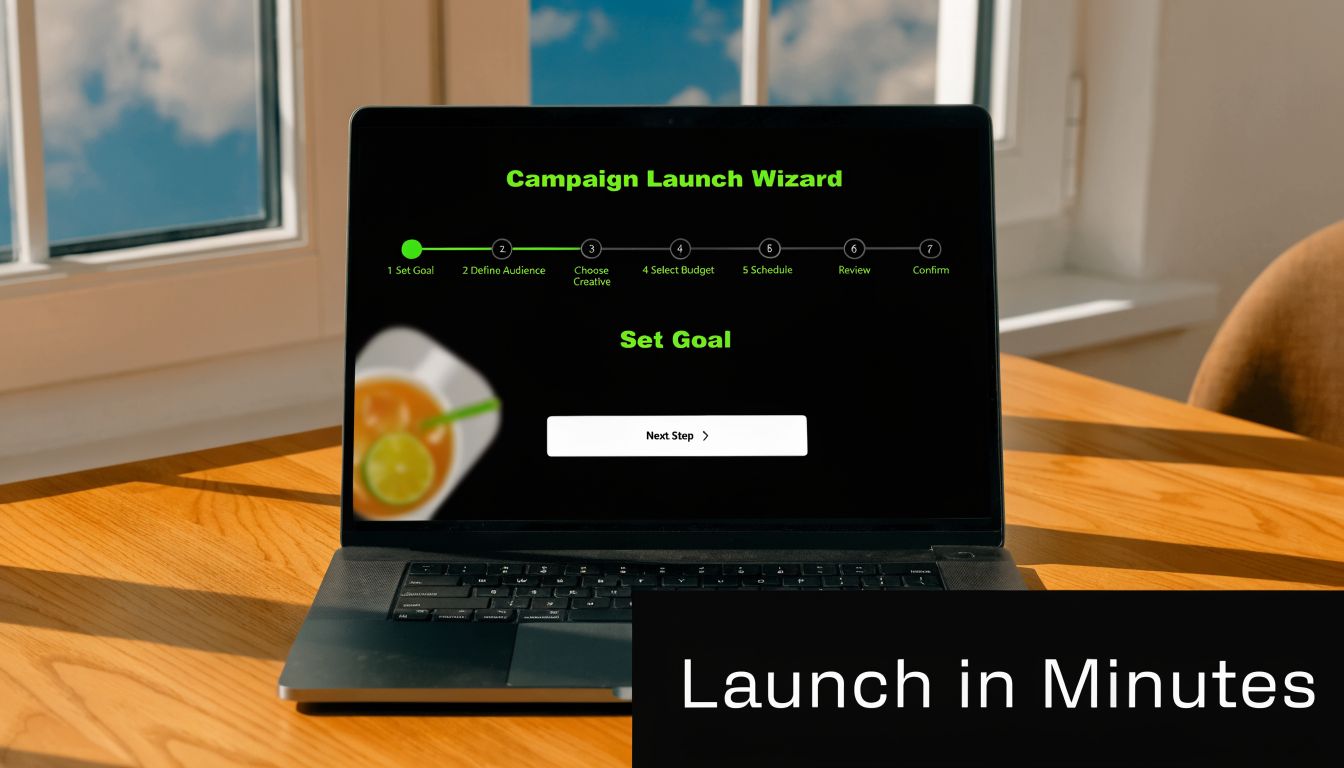
This type of value proposition is about time-to-launch. It appeals to merchants who need a usable first campaign fast, not another week of briefs, copy drafts, and creative revisions.
Social Loop AI commits to that with a guided 7-step workflow that turns a product URL into a launch plan and ad batch in under 10 minutes. That framing works because the promise is concrete. It sells a shorter path from product page to live campaign.
What this promise sounds like in the market
The strongest micro-copy here is specific and operational:
- Speed-led: "Turn your product URL into launch-ready Meta ads in under 10 minutes."
- Beginner-led: "Build your first campaign today without hiring an agency."
- Window-led: "Launch while demand is still rising."
Each version speaks to a different pressure. A first-time Shopify seller testing a trending kitchen item wants to move before interest fades. A merchant selling holiday bundles wants to get campaigns live before the calendar cuts demand in half.
The trade-off is simple. Fast only helps if the output is good enough to publish with light edits.
Practical rule: A speed value proposition needs a credible finish line. "Ready to launch" is stronger than "AI-generated" because buyers care about what they can do next.
A simple low-budget test
Run this like a cheap proof-of-concept, not a full rollout.
Start with one product, one audience, and one core promise: speed. Have the product URL, product description, and rough buyer profile ready before opening the tool. Generate the campaign, review the landing page recommendations, and tighten any claims that feel too broad.
Use one opening line across your first test:
"Launch your first Meta campaign without spending days building it."
Then build a small Meta test around that single angle:
- Creative A: Product-focused visual with the headline "From product URL to ads in under 10 minutes"
- Creative B: Founder or creator talking to camera with "I launched this campaign in one sitting"
- Creative C: Simple screen-recording style walkthrough showing the URL-to-output flow
Keep spend contained. The goal is to find out whether speed gets the click and whether the click turns into qualified traffic. If CTR is strong but downstream performance is weak, the message may be attracting curious beginners instead of buyers ready to purchase.
That distinction matters. Convenience works as a value proposition because it removes friction and helps people act faster, as noted earlier in the article. The same principle applies here. Shorter setup time is valuable when it helps merchants test products while the opportunity is still open.
A short walkthrough helps people understand this promise faster:
2. Proven Creative Angles Without Guesswork Problem to Solution UGC Social Proof FOMO Identity
A merchant launches three ads for the same product. One says the product is high quality. One says customers love it. One says stock is limited. If none of those messages came from a clear buying motive, the test produces noise, not insight.
The value proposition here is directional clarity. Social Loop AI gives sellers a starting set of proven angle types so the first round of creative testing is built around buyer psychology, not random headlines.
Five angle templates that actually help
These five angles cover different reasons people buy, and each one should be tested as its own hypothesis:
- Problem to Solution: "Tired of messy cables in every room? Clean it up in minutes."
- UGC: "I bought this for my desk and ended up ordering a second one for the kitchen."
- Social Proof: "The organizer people keep reordering because it stays put."
- FOMO: "Seasonal colors tend to sell first."
- Identity: "For people who want their space to look as organized as they feel."
That mix is useful because each angle does a different job.
Problem to Solution usually wins when the pain is obvious and easy to show in the first three seconds. UGC works well when the product needs a human voice to feel believable. Social Proof reduces hesitation. FOMO can lift action, but only if the scarcity feels real. Identity is often the strongest angle for products people use to signal taste, discipline, status, or belonging.
I would not test all five with the same creative treatment.
If the product is visual, keep the format stable and change only the angle. For example, run the same product shot with five different hooks. If the product needs explanation, keep the script structure stable and swap only the opening line. That isolates the message. It also gives you cleaner readouts on what buyers respond to.
A few practical examples:
- A skincare brand could test Problem to Solution against Social Proof. One ad leads with breakouts and irritation. The other leads with repeat buyers and visible routines.
- A fitness product could test Identity against UGC. One speaks to becoming more disciplined. The other sounds like a real customer explaining why they stuck with it.
- A seasonal home product could test FOMO against Problem to Solution. One pushes urgency. One shows the mess or inconvenience the product removes.
What usually fails
Vague value props flatten every angle into the same generic pitch. "High quality product at a great price" does not give the buyer a reason to care now. It does not explain the problem, reduce risk, or reinforce who the buyer wants to be.
Strong ads pick one motive and commit to it.
That is the lesson behind well-known value proposition examples mentioned earlier in the article. The takeaway is not to mimic a famous slogan. The takeaway is to match the message to a buyer belief, then test that belief in the market.
For a low-budget Meta plan, keep this simple:
- Build one ad set per angle
- Use 2 to 3 creatives inside each ad set
- Hold the audience constant in round one
- Watch hook rate, CTR, comments, and landing page behavior together
- Cut angles that get cheap clicks but weak downstream intent
That last point matters. An angle can win attention and still lose money. UGC often gets engagement. Identity can get strong saves and shares. Problem to Solution can pull qualified clicks faster. The goal is not to find the loudest message. The goal is to find the message that attracts buyers with purchase intent.
This section is where the article's case-study approach matters. These are not abstract categories pulled from big-brand campaigns. They are five specific angle types a merchant can generate inside one tool, test with limited spend, and learn from fast enough to improve the next batch.
3. Brand-Aware Creatives at Scale 10 Ads Per Batch All Cohesive and Targeted
You launch a new batch on Monday. By Wednesday, one ad is polished and on-brand, three look like they came from a different store, and the rest are sitting in drafts because rewriting every variation takes too long. That is the usual failure mode when creative production depends on one-off decisions.
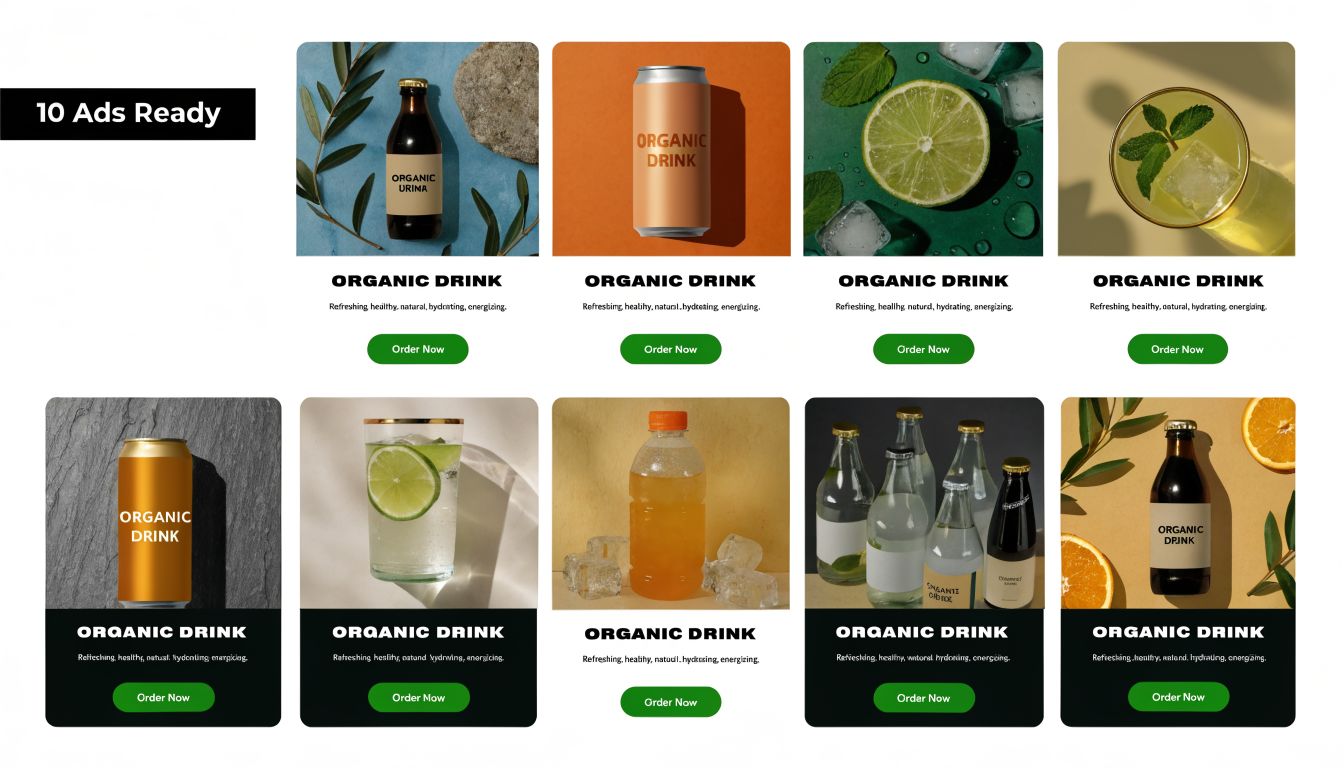
The value proposition here is consistency at volume. Social Loop AI produces 10 image ads in one batch, with hooks, copy, CTAs, layouts, and color direction tied to the angle you chose and the objections you need to answer.
Why cohesive volume beats random variety
Scale only helps if the ads still feel like they came from the same brand. Otherwise, the test gets noisy fast. You are no longer comparing angle against angle. You are comparing different tones, design standards, and trust signals all at once.
That slows learning and creates false winners.
A good batch keeps the brand recognizable while changing the selling argument. A watch store can test scarcity, social proof, and identity without swapping into three different visual identities. A supplement brand can run benefit-led hooks across multiple layouts while keeping the promise, tone, and look steady enough to read the result cleanly.
That is the practical advantage of this value prop type. It is not just scale. It is controlled scale.
What this looks like in actual testing
Here is a simple way to use a 10-ad batch without wasting spend:
- Launch 3 to 4 ads first, each representing a clearly different angle
- Keep the offer and audience stable in round one
- Name each ad by angle, hook style, and objection addressed
- Hold back the rest of the batch for the second round instead of dumping all 10 into one test
- Promote the winners into fresh variations that keep the same visual system
I use this structure because batch output can create a false sense of readiness. More ads do not automatically mean a better test. If the differences are too minor, Meta spreads impressions across near-duplicates and you learn very little. If the differences are too extreme, you cannot tell whether the winner came from the message, the design, or the brand presentation.
The sweet spot is controlled contrast. Change the reason to care. Keep the brand cues stable.
Micro-copy examples for this value proposition type
If the product is a collagen supplement, a cohesive 10-ad batch might include lines like:
- "Daily collagen support without adding another complicated routine."
- "The simple scoop customers reorder because it fits real mornings."
- "Support skin, hair, and joints with a formula built for consistency."
- "One product, multiple benefits, and a brand look customers remember."
Each line pushes a different buying motive, but none of them sounds like a different company wrote it. That matters more than people think. In feed, visual and verbal consistency helps the buyer connect repeated impressions back to the same brand, which is how recall starts to build on a budget.
Low-budget Meta test plan for batch creative
For a small account, I would run this in two rounds.
Round one tests four ads from the batch. Pick the four with the strongest contrast in angle. Let them run long enough to compare thumb-stop rate, CTR, and early on-site behavior. Cut weak fits quickly, especially ads that earn clicks from curiosity but do not carry intent.
Round two uses the remaining budget on the best-performing angle. Pull in 2 to 3 more ads from the batch that keep the same core message but vary the hook or layout. That gives you a cleaner path to iteration than starting from scratch every time.
This section matters because it shows a distinct kind of value proposition. The promise is not speed alone, and it is not just creative quality. It is brand-aware scale. One tool, one product input, 10 coordinated ads, and a testing setup that a small ecommerce team can effectively run.
4. Precise Buyer Profile Definition Audit-Informed Audience Segmentation Without Guesswork
Most beginner targeting is too broad because the thinking is too broad. "Women 25 to 44 interested in skincare" isn't a buyer profile. It's a dropdown selection.
A real value proposition gets sharper when the buyer is sharper. Social Loop AI starts with the product page audit and pushes you toward a defined profile tied to pains, motivations, and objections.
The better way to define the buyer
Write the buyer in one sentence. Not demographics first. Situation first.
Examples:
- Busy professional who wants better sleep because stress wrecks their evenings.
- Working parent who wants home fitness equipment to save commute time.
- Eco-conscious skincare buyer who wants natural-looking results without harsh ingredients.
That single sentence changes the ad immediately. You stop writing to "everyone who might buy" and start writing to one person with one reason to care.
Micro-copy examples by buyer profile
A good buyer-profile-based value proposition sounds like this:
- "Sleep support for professionals whose minds won't switch off at night."
- "Home workouts for parents who can't lose an hour driving to the gym."
- "Skincare for ingredient-conscious buyers who still want visible results."
This same logic is visible in B2B as well. In a value proposition refinement case study, a SaaS client moved away from vague messaging and saw a 47% increase in qualified leads and a 32% reduction in CAC. The win came from clarity around who the product served and what problem it solved.
If your buyer fears low quality, test Social Proof. If they fear wasting time, test speed. If they fear missing a trend, test FOMO. Profiles don't replace testing. They make the tests worth running.
5. Budget-Aware Test Planning Round-by-Round Spend Allocation and Scaling Logic
You set a $30 daily budget, launch five ads, check results at lunch, and start editing everything by dinner. That pattern burns budget fast because it produces noise, not learning.
A budget-aware value proposition works when it promises control. Social Loop AI turns a limited daily spend into a testing sequence with clear rules for round one, round two, and scale decisions. For small stores, that matters more than another batch of ad ideas.
What a useful budget promise sounds like
The strongest micro-copy here sounds like an operator wrote it:
- "Know what to test first, what to pause, and where to put the next dollar."
- "Turn a small daily budget into a structured testing plan."
- "Stop guessing when to cut weak ads and fund the next winner."
That message speaks to a real fear. Merchants can tolerate a few losing tests. What they hate is spending money and ending the week with no usable signal.
Small budgets still work when the test design is disciplined.
A low-budget testing plan that gives you clean reads
Start with three angles, not ten. For this article's case-study setup, that means testing three distinct value proposition types from the same tool, such as speed, certainty, and scale. Keep the offer, landing page, and campaign objective fixed so the creative angle is doing the work.
Round 1 is for screening. Put even spend behind each concept and judge early on click quality, thumb-stop rate, and whether one angle is clearly trailing. Do not rewrite copy, swap audiences, and change hooks all at once. One variable per round keeps the result usable.
Round 2 is for refinement. Take the best angle and test two to three tighter versions of it. If "launch ads in minutes" wins, the next round might compare "from product URL to ad in minutes" against "skip the brief, get ads today" and a proof-led version with the workflow shown on screen.
Round 3 is for scale. Increase budget on the best performer carefully, then test broader audiences or adjacent hooks without abandoning the angle that earned the win in the first place.
The trade-off most beginners miss
More ads do not always mean better testing. With a small budget, too many variations spread spend so thin that nothing reaches significance. Too few variations create false confidence because one decent ad has no real benchmark.
The sweet spot is usually narrow. A handful of clear angles, a fixed budget per round, and written rules for what gets paused, what gets another chance, and what earns more spend.
A simple small-store workflow looks like this:
- Pick three value proposition angles.
- Launch with modest, equal budgets.
- Review directional signals after the first round.
- Pause obvious laggards.
- Build the next round around the strongest angle instead of starting over.
That is the underlying promise behind this type of value proposition. It helps merchants protect cash while still learning fast enough to find a winner.
6. Landing-Page Readiness Audit and Copy Optimization Improve CTR Before You Spend
A store owner launches a fresh Meta test, sees decent thumb-stop rates, then watches the campaign stall because the product page does not carry the promise the ad just made. That is a landing-page problem, not an ad problem, and it burns budget fast.
Social Loop AI addresses that gap by scoring landing-page readiness on a 0 to 100 scale and suggesting copy changes before launch. For small ecommerce teams, that kind of pre-flight check matters because the cheapest click is the one you do not waste.
The value proposition is lower-friction buying
Buyers click with momentum. The page has to confirm they are in the right place within seconds. If the hero is vague, the benefits are buried, or the trust signals show up too late, CTR can look fine while downstream performance stays weak.
Useful micro-copy:
- "Check page readiness before you buy traffic."
- "Tighten your product-page copy before launch."
- "Fix the friction that kills paid clicks."
I usually audit three areas first because they change outcomes fastest on a limited budget:
- Hero promise: Make the outcome obvious in one screen. A visitor should know what the product is, who it is for, and why it is better.
- Trust signals: Place reviews, guarantees, shipping clarity, or return language near the first points of hesitation.
- Benefit hierarchy: Lead with the customer result. Features can support the claim, but they should not carry the page alone.
The trade-off is speed versus completeness. A founder can spend two weeks polishing a page and miss the market window, or rush traffic to a page that has no real chance to convert. The better move is a fast readiness pass that fixes the highest-friction gaps first.
A phone accessory brand might have a clean ad and a weak hero. A supplement page might explain ingredients before it explains use case. A new store might look risky because there is no proof, no guarantee, and no reason to trust delivery. In each case, the offer is not the only issue. The page is failing to support the offer.
As noted earlier with Prime, buyers accept higher prices when the value feels clear and credible. Your landing page has to create that same feeling on a smaller scale. It has to make the click feel justified and the next step feel safe.
7. Meta Ads and Social Media Post Creation Dual-Channel Creative Output From One Tool
Paid and organic usually drift apart when one person is doing everything. The ad says one thing, the Instagram post says another, and the store feels like three different businesses stitched together.
A dual-channel value proposition fixes that. Social Loop AI can turn one product setup into both Meta ads and social media posts, using the same angles and message base across channels.
Why channel consistency matters
This is especially useful for small brands because organic posts often warm up the exact language paid ads later amplify. A fashion seller can post identity-led creatives organically, then run the strongest angle in ads. A creator can test Problem→Solution messaging in social content before paying to scale it.
The value proposition here is coherence. One strategy. Multiple outputs. Less message drift.
When paid and organic use the same promise, buyers understand the offer faster.
A lean rollout plan
Start organic first when possible. Put a few creatives into stories, short posts, or simple social uploads and watch which framing gets questions, saves, or comments. Then run paid traffic behind the angle that already feels native to the audience.
For a small store, practical micro-copy looks like this:
- "Build your ads and posts from the same winning angle."
- "Turn one product page into paid and organic creative."
- "Keep your brand voice consistent without making content twice."
This matters even more as adaptive testing becomes more common. One projection cited in background material notes that Meta's Q4 2025 shift favored adaptive campaigns, and a January 2026 trade reference linked that approach to stronger ROAS. Whether or not a beginner tracks every platform change, the tactical point stays the same. Static messaging ages fast. Reusable, angle-based creative systems age better.
8. Data-Driven Iteration Guidance Post-Launch Logging and Scaling Recommendations
You launch three ads on Monday. By Thursday, one has cheap clicks, one has better add-to-cart activity, and one burns spend with no clear signal. The next move decides whether the test becomes a system or just another forgotten campaign.
This value proposition is about what happens after first spend. Social Loop AI helps merchants log results in a structured way, then turn those notes into a clear decision: scale, pause, revise, or retest.
Strong value propositions get sharper under live traffic
Pre-launch research gives you a starting point. Post-launch data shows which promise pulls. In practice, those are often different.
A speed angle might win the click because it is easy to understand fast. A certainty angle might bring fewer clicks but stronger purchase intent. A polished product image might stop the scroll, while a plain UGC-style creative brings in better buyers because it feels more believable.
That trade-off matters.
Merchants who improve quickly do not judge campaigns at the ad level alone. They break performance into parts and keep what worked. The hook may stay. The body copy may change. The CTA may stay. The visual frame may need replacement.
What to log after each test round
Use the same logging format every time so patterns are easy to spot after two or three rounds:
- Angle: speed, simplicity, proof, price, identity, certainty
- Hook: the first line or first visual promise
- Creative type: static image, UGC-style, product close-up, testimonial
- CTR quality: not just clicks, but whether those clicks led to product-page engagement
- Purchase signal: add to cart, initiate checkout, purchase, or no downstream action
- Objection handled: price, trust, fit, quality, shipping time, confusion
- Next action: scale, rewrite, swap visual, change audience, or cut
This is the part newer operators skip. They remember the winner and forget why it won.
I prefer a simple rule. If an ad wins clicks but not buying intent, keep the angle and change the proof. If it gets intent but weak CTR, keep the offer and rewrite the hook. If it gets neither, cut it fast and move budget to the next test.
A practical post-launch loop
For a low-budget Meta account, one clean review cycle per 3 to 5 days is usually enough. Earlier than that, the account is often too noisy. Later than that, weak ads sit too long and waste budget.
Useful micro-copy for this value proposition looks like this:
- "Know what to scale after the first test round."
- "Track the angle, not just the ad."
- "Turn campaign notes into your next winning variation."
As noted earlier, strong messaging often improves through refinement rather than reinvention. That is the fundamental promise here. Social Loop AI does not just help generate ads. It helps merchants build a repeatable testing record, so each round starts smarter than the last.
9. No Design or Copywriting Skills Required Professional Output From a Guided Workflow
A founder picks a product, opens Ads Manager, and gets stuck before the first campaign goes live. The offer is there. The product page is live. What is missing is the skill stack to turn that into credible creative.
That is the gap this value proposition needs to close.
Social Loop AI is useful here because it turns scattered tasks into a guided sequence. Instead of asking a beginner to write headlines from scratch, choose visual angles blindly, and piece together ad structure by instinct, it gives them a path to follow and output they can use.
What this value proposition is really selling
This message works because it sells capability with guardrails. The buyer is not looking for artistic expression. They want ads that look considered, sound clear, and match the product without hiring a designer or copywriter first.
Useful micro-copy for this type of value proposition includes:
- "Create polished ads without learning design first."
- "Get structured copy and creative direction in one workflow."
- "Launch ads that look intentional, even on your first try."
That promise is stronger than "easy to use." Easy often sounds shallow. Guided output sounds more credible because it implies constraints, decisions, and a better chance of getting something usable on the first pass.
Why guided output matters for small merchants
Beginners usually do not lose because they lack effort. They lose because they are making too many judgment calls with no framework. Which angle should lead. How much copy is too much. What the visual should prove. Whether the ad looks generic or product-specific.
A guided workflow cuts down bad randomness.
That matters more than people admit. A rough product can still get traction with clear messaging and decent presentation. A strong product often stalls when the ad looks improvised or the copy reads like it was stitched together from competitors.
As noted earlier, large brands win partly because message and presentation reinforce each other. Smaller stores do not need enterprise polish. They need creative that looks trustworthy enough to earn the click and clear enough to carry intent.
How to get better output without design or copy experience
The shortcut is not speed alone. It is better inputs.
Write a specific buyer profile before generating anything. Choose one angle per ad, not three. Give the tool concrete product details, real objections, and the tone you want. If the setup is vague, the output gets vague fast.
Then review the drafts like an operator, not a spectator. Check whether the headline makes one clear promise. Check whether the body copy supports that promise instead of introducing a new one. Check whether the visual direction proves the claim or just decorates it.
Used that way, guided output does two jobs at once. It helps beginners publish work that looks more professional now, and it teaches them what stronger ad structure looks like over time.
10. Competitive Pricing and Quick ROI Low-Cost Testing Framework for Budget-Conscious Merchants
Cheap isn't a value proposition by itself. Cheap often signals risk. The stronger promise is controlled experimentation at a cost a new merchant can tolerate.
That's why budget-conscious value proposition examples work best when they combine affordability with speed, structure, and learning. Social Loop AI fits that framing because it helps beginners test offers without agency overhead and without building a full campaign stack from scratch.
What budget-conscious buyers actually want
They don't just want lower cost. They want faster clarity.
A side-hustle merchant wants to know whether a product deserves more spend. A new Shopify owner wants proof of message-market fit before involving freelancers or bigger budgets. A creator wants a way to test without turning content production into a second full-time job.
The strongest micro-copy for lean budgets
Try language like this:
- "Test your offer before you overinvest in it."
- "Launch with a small budget and a real plan."
- "Get to a clear yes or no faster."
That framing is more believable than promising instant profitability. It also matches how good operators think. Early tests are there to produce evidence.
This is also where beginner-focused content still has a gap. One future-dated industry gap summary says a 2025 Shopify report found many new dropshipping stores fail early because ad positioning is weak, but those figures were described as internal data and shouldn't be treated as broadly verified. The qualitative takeaway still matters. New sellers struggle most with message clarity, not store setup.
A lean value proposition should help them answer three questions fast: who is this for, why should they care, and what's the first test worth running?
10 Value Proposition Examples Compared
| Feature | Implementation Complexity 🔄 | Resource Requirements ⚡ | Expected Outcomes ⭐📊 | Ideal Use Cases 💡 | Key Advantages ⭐ |
|---|---|---|---|---|---|
| Time-to-Launch Efficiency: From Product URL to Campaign in Minutes | Low, 7-step wizard, under 10 minutes | Minimal, product URL, basic audience info | Rapid campaign launch; reduced setup time; trade-off vs hyper-customization | First-time Shopify sellers, side-hustles, rapid A/B tests | Massive time savings; lowers entry barrier; structured guidance |
| Proven Creative Angles Without Guesswork | Low–Medium, select 3–5 pre-validated angles | Minimal, buyer profile + product category | Faster identification of winning messaging; reduced wasted spend | Beginners testing messaging, cross-vertical ecommerce | Data-backed angle frameworks; reduces creative paralysis |
| Brand-Aware Creatives at Scale: 10 Ads Per Batch | Medium, review and select from batch outputs | Moderate, imagery & budget for testing multiple ads | Cohesive creative sets; more reliable brand recognition | New brands launching campaigns; multi-creative tests | Professional-quality, cohesive batches; pre-tagged creatives |
| Precise Buyer Profile Definition | Medium, audit + guided psychographic profiling | Low, time and honest product/customer insight | Tighter targeting; improved ad relevance and CTR | Merchants needing precise audience fit and messaging | Psychographic focus; objection mapping for better creative fit |
| Budget-Aware Test Planning | Low–Medium, automated rounds but requires discipline | Financial, defined daily budgets; time to follow rounds | Disciplined spend; clearer pause/scale decisions; lower waste | Cash-conscious sellers, structured testers | Repeatable round-by-round allocation; data-driven scaling logic |
| Landing-Page Readiness Audit and Copy Optimization | Low, automated scoring and pasteable fixes | Minimal, product page access and time to implement fixes | Improved CTR and conversion potential before ad spend | Any merchant launching ads for the first time | Priority-ranked fixes; instant pasteable copy; mobile checks |
| Meta Ads and Social Media Post Creation | Medium, dual-spec outputs may need adaptation | Moderate, content management for organic + paid | Cross-channel consistency; extended content ROI | Sellers wanting organic + paid consistency, creators | Dual-channel creatives from one setup; consistent messaging |
| Data-Driven Iteration Guidance | Medium, requires logging and analysis | Time, regular result logging and accurate data | Actionable scaling/pausing recommendations; learning loop | Post-launch optimizers and iterative advertisers | Trend analysis; contextual next-step guidance from real data |
| No Design or Copywriting Skills Required | Low, guided workflow, no tools needed | Very low, only product info and time | Professional output without specialists; faster onboarding | Non-marketers, bootstrapped founders, solo founders | Democratizes ad creation; teaches best practices implicitly |
| Competitive Pricing and Quick ROI | Low, affordable framing and simple workflows | Low, small daily budgets and subscription cost | Fast validation; ability to test multiple products cheaply | Bootstrapped founders, side-hustlers, early testers | Low financial risk; transparent pricing; fast-fail testing framework |
Your Blueprint for an Unbeatable Value Prop
The difference between a store that stalls and a store that gets traction usually isn't the product alone. It's the sharpness of the promise around that product. That's why the best value proposition examples are so useful. They show you that good messaging isn't decorative. It's operational. It decides what angle you test, what ad you write, what landing page copy you change, and how you interpret results once traffic starts coming in.
If you're building from scratch, don't try to invent a grand brand manifesto. Start smaller and more practical. Pick one promise your buyer would care about immediately. Maybe it's speed. Maybe it's certainty. Maybe it's identity, proof, convenience, or budget control. Then write the ad so the buyer can understand the payoff in a few seconds.
The next step is where most stores either improve fast or stay confused. Test one type of promise against another. Don't just swap colors and call that iteration. If you test a Problem→Solution angle, compare it with Social Proof or Identity. If one message wins early, don't abandon the campaign and start over. Build the next round around the signal you already earned.
Disciplined marketers separate themselves from hopeful ones. Hope sounds like "let's try some creatives." A system sounds like "this buyer profile responded to this angle, this page section still has friction, and this next batch should lean harder into the winning objection." That's how a value proposition stops being a line on a homepage and starts becoming an engine for better decisions.
Big brands make this easy to miss because their value props look polished in hindsight. Amazon Prime bundled convenience so well that it became a loyalty machine. Nike turned product performance into identity. Those are strong examples, but the lesson for a smaller ecommerce store is simpler. Clear promises win. Specific promises test better. Repeatable promises scale better.
So use these 10 frameworks as starting points, not slogans to copy. Choose the one that matches your product and buyer. Write tight micro-copy. Launch a small Meta test. Review what happened without ego. Keep the angle that resonates and cut the one that doesn't.
Your best value proposition usually isn't discovered in a brainstorm. It's uncovered through structured testing until the market tells you, clearly, what promise it believes.
If you want a faster way to turn your product page into a real ad strategy, try Social Loop AI. It helps first-time dropshippers and new ecommerce owners go from URL to buyer profile, proven angles, landing-page fixes, Meta ad creatives, social posts, and a practical testing plan without hiring an agency.
Generated with the Outrank tool