Blog
What Is a Good Cost Per Acquisition? A Dropshipper's Guide
Published May 11, 2026
You launched your first Meta campaign. The dashboard finally has data. You see clicks, spend, maybe a few add-to-carts, maybe even a sale. Then your eyes land on cost per acquisition and the panic starts.
Is that number good? Bad? Too early to judge? Did you just prove the product works, or did you pay too much to learn almost nothing?
That confusion is normal. New dropshippers usually look at CPA as one number in a sea of numbers. Experienced buyers treat it differently. They use it as the quickest reality check in the account. If your CPA is too high, your budget leaks. If it makes sense against what a customer is worth, you have something you can improve and scale.
The catch is that most beginners calculate CPA too loosely. They count ad spend and ignore the rest. That makes weak campaigns look acceptable, and acceptable campaigns look scalable when they aren't. The number you need isn't just platform CPA. It's your true CPA.
Table of Contents
- Your First Ad Results Are In Now What
- How to Calculate Your True Cost Per Acquisition
- The Relationship Between CPA LTV CAC and ROAS
- What Are Good CPA Benchmarks for Dropshipping
- How Attribution Models Can Skew Your CPA
- Practical Ways to Lower Your CPA on a Small Budget
- Your CPA Optimization Checklist
- Cost Per Acquisition Frequently Asked Questions
Your First Ad Results Are In Now What
The usual first-time scenario looks like this. You spent money, traffic showed up, and now you're trying to decode whether the campaign is promising or broken. One ad has cheap clicks but no purchases. Another ad has a sale, but the CPA looks ugly. A third ad has no conversion data at all.
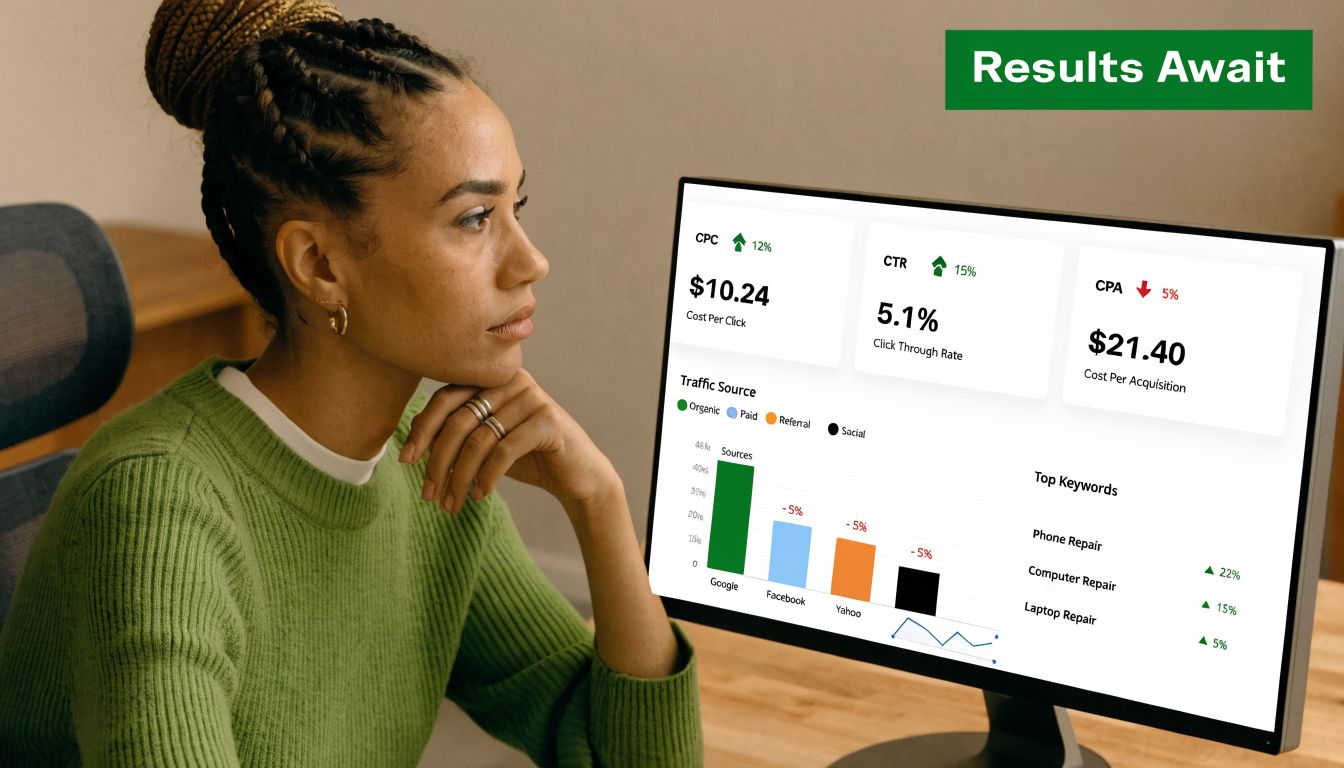
Beginners often chase the wrong metric in this situation. They celebrate a low CPC or a high CTR, then wonder why the store still loses money. Clicks are traffic. CPA is closer to business reality because it tells you what you had to spend to get an actual customer.
If you strip it down, cost per acquisition means one thing: how much it cost to turn ad spend into a paying customer. For a dropshipper, that's the number standing between “this product might work” and “this product can survive after fees, creatives, apps, and returns.”
Why the dashboard number can mislead you
The number inside Meta is useful, but it's incomplete on its own. Platform reporting tends to show the acquisition cost tied to campaign spend. Your business pays more than campaign spend.
You still pay for the store stack, product testing, and the creative work needed to produce ads worth clicking. That matters more now because ecommerce acquisition costs have climbed sharply. LoyaltyLion's ecommerce CAC analysis says CAC rose 222% from 2013 to 2025, and it notes that a sustainable business typically needs an LTV:CAC ratio of 3:1.
Practical rule: Don't ask, “Did I get a sale?” Ask, “Did I buy a customer at a cost my store can survive?”
What works and what doesn't
What works is treating your first campaign as a measurement tool. You use it to learn which message, angle, and audience combination gives you the cleanest path to a viable CPA.
What doesn't work is reacting emotionally to one day of messy data. New accounts rarely look clean on day one. The job isn't to find instant perfection. The job is to find a repeatable way to judge whether you're buying customers efficiently enough to keep going.
How to Calculate Your True Cost Per Acquisition
Most guides stop at the textbook formula. That's fine for a classroom. It's not enough for a small store with thin margins.
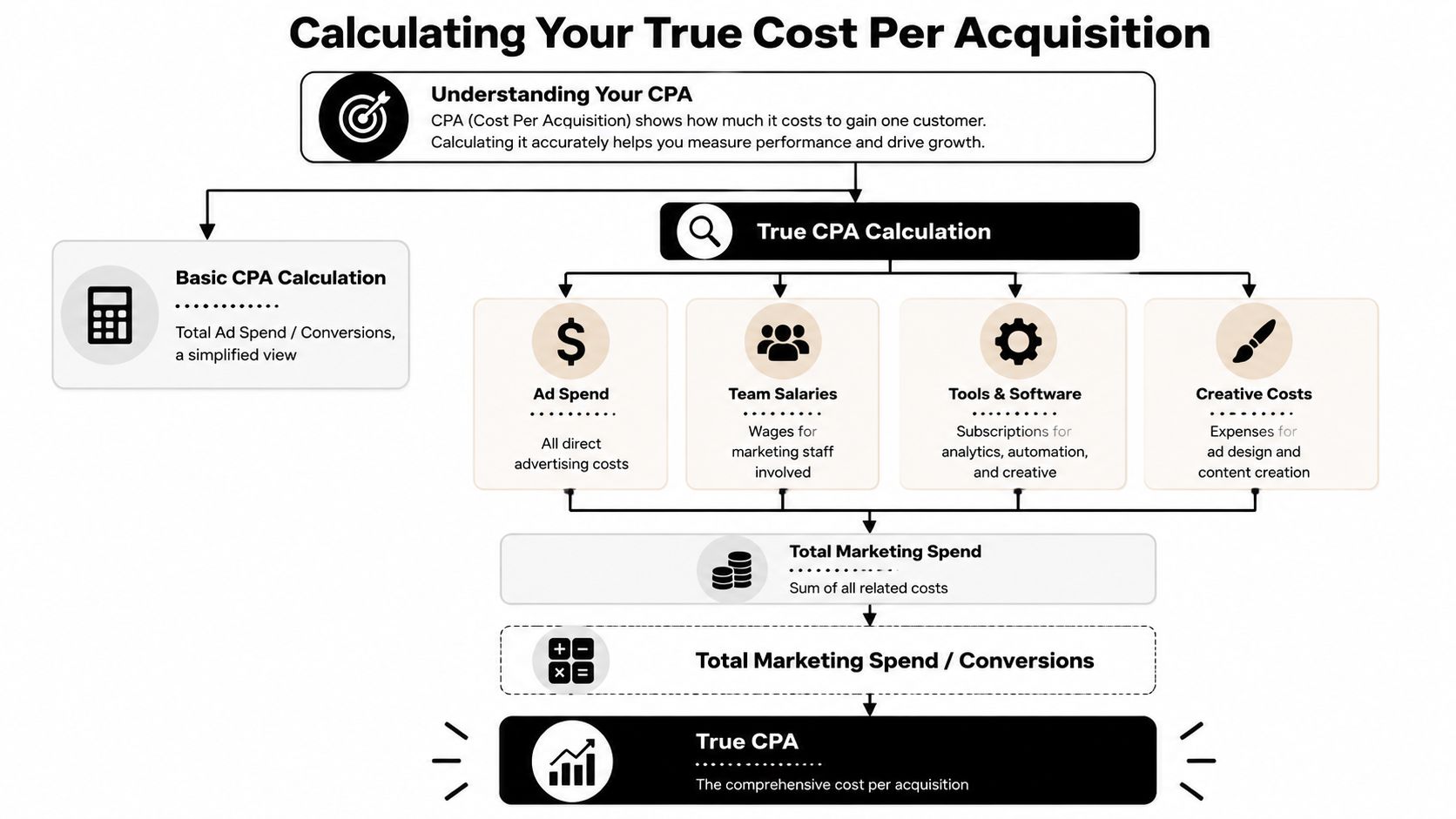
Start with the simple formula
The basic version is straightforward:
CPA = total campaign cost / number of acquisitions
If you spend money on ads and get customers, you divide one by the other. That's your starting point, not your finish line.
This quick version is useful when you're comparing ad sets inside one account. It helps you spot whether one audience or one creative is cheaper than another. But if you use only this number to decide whether the business is profitable, you'll fool yourself.
Then build your true CPA
True CPA includes the costs beginners forget because they don't appear neatly in Ads Manager.
Use this checklist:
- Ad spend: The money paid directly to Meta.
- Creative cost: What you spent to make image ads, videos, copy, hooks, and variations.
- Software and tools: Store apps, tracking tools, reporting tools, creative tools, and anything else required to run the campaign.
- Platform and transaction costs: Fees tied to selling and processing the order.
- Product testing costs: Samples and testing expenses that are part of getting the campaign live.
A practical template looks like this:
| Cost bucket | Include it in True CPA |
|---|---|
| Ad spend | Yes |
| Creative production | Yes |
| Software and apps | Yes |
| Store and payment-related selling costs | Yes |
| Product sample and testing costs | Yes |
That fuller view matters. Improvado's CPA guide notes that for first-time dropshippers, true CPA is often 29% to 50% higher than ad-spend-only calculations suggest. It also cites a Triple Whale analysis where a perceived $50 CPA was $70 once tooling and creative costs were included.
If your ad-only CPA looks barely acceptable, your true CPA is often the number that tells the truth.
A simple way to track it each week
Don't overbuild this. Use a sheet with four columns:
- All campaign-related costs
- New customers acquired
- Ad-only CPA
- True CPA
Then compare the two. If the gap is large, you know your operation is too heavy for your current sales volume. That usually means one of two things. You're spending too much to create and test ads, or your conversion rate isn't high enough to spread those costs across enough orders.
Beginners usually lose money by ignoring hidden costs, not by misunderstanding the formula itself.
The Relationship Between CPA LTV CAC and ROAS
CPA tells you what a conversion cost. LTV, CAC, and ROAS tell you whether that conversion was worth buying.
Here's the mistake beginners make. They see a low CPA in Ads Manager, assume they found a winner, and raise budget. Then the store still struggles because those customers refund, never buy again, or only convert when discounting cuts the margin too thin.
That is why these four metrics have to be read together, especially in dropshipping where margins are usually tighter than the dashboard makes them look.
A cheap CPA can still lose money
Use the terms this way:
- CPA is what it cost to get a customer from a specific campaign or ad set.
- CAC is the broader cost to acquire a customer across the business.
- LTV is the revenue or profit a customer generates over time, depending on how you track it.
- ROAS is the revenue returned for ad spend.
The difference between CPA and CAC matters more than many first-time store owners expect. CPA can look clean inside the ad account. CAC gets messier because it reflects the business reality around that campaign. In a dropshipping setup, that gap gets wider fast once you include apps, content production, product testing, and other acquisition-related costs.
That is also where "True CPA" becomes useful. If your ad account shows a $25 CPA but your true acquisition cost is closer to $40 after hidden costs, every decision you make from that point is distorted.
How the metrics work together
A simple example makes this easier.
Say a campaign acquires customers at a $30 CPA. On paper, that can look solid. But if the average first order only leaves you with a thin contribution margin, and buyers rarely come back, that $30 customer may still be a bad deal.
Now flip it. Another campaign brings in customers at $45 CPA. That sounds worse at first glance. But if those buyers purchase a bundle, have lower refund rates, and come back within 30 days, the higher CPA may be the better buy.
That is the purpose of LTV. It tells you whether a more expensive customer is truly more valuable.
CAC keeps the score honest. ROAS gives you speed and direction. CPA helps you judge campaign efficiency. None of them should be used alone.
Ratios matter more than vanity numbers
The practical question is not, "How low is my CPA?" It is, "Can this customer support my full acquisition cost and still leave margin?"
For a small-budget dropshipper, the cleanest way to judge that is with the LTV:CAC ratio. As noted earlier, a common rule of thumb is that you want enough lifetime value to comfortably exceed your acquisition cost. The exact threshold depends on your margins, refund rate, fulfillment issues, and how fast cash needs to come back into the business.
Use this filter when you review results:
- Low CPA plus weak repeat purchase rate usually means the traffic is cheap, not high quality.
- Higher CPA plus strong post-purchase behavior can still be profitable.
- Strong ROAS with weak margin is not a win.
- Healthy LTV with bloated CAC often means your offer works, but your acquisition system is too expensive.
For stores spending under $100 per day, this matters even more. Small accounts do not have much room for bad interpretation. If you scale based on a flattering CPA or ROAS number, you can burn a week of budget before you realize the customer was never profitable.
A short explainer can help if these metrics still feel abstract:
The best media buyers judge CPA in context. The right CPA is the one that leaves room for product cost, software, creative testing, mistakes, and profit.
Where ROAS fits, and where it misleads
ROAS is useful because it gives quick feedback. If you spend $100 and bring back $300 in revenue, the campaign is clearly doing something right.
But ROAS has a blind spot. It does not tell you what happened after product cost, refunds, shipping issues, payment fees, creative spend, and tooling. A campaign can show acceptable ROAS and still be weak for a dropshipping business with thin margins.
I use ROAS as an early signal, not a final verdict. CPA shows acquisition efficiency. LTV shows customer value. CAC shows total acquisition cost. Put together, they answer the only question that matters: are you buying customers at a price your business can survive and repeat?
What Are Good CPA Benchmarks for Dropshipping
A beginner gets their first few sales at a $42 CPA and asks the wrong question. “Is that good?” The better question is, “Good for this product, with these margins, on this budget?”
That is the only benchmark that matters.
The realistic starting range
For Meta ads in ecommerce dropshipping, Mountain's CPA benchmark article puts many healthy campaigns in the $25 to $80 per acquisition range. It also notes that first campaigns often come in higher before the account, creatives, and landing page improve.
Use that range as orientation, not a target.
A $30 CPA can still lose money on a low-ticket product with thin margins, high refund rates, and paid apps eating into profit. A $60 CPA can be workable if the product has strong average order value, decent repeat purchase behavior, and low fulfillment issues. That is why I prefer a maximum acceptable CPA based on your numbers, then compare it to market ranges after.
Build your benchmark from the back end first
Start with what one new customer is worth to your store, not what another seller posted in a screenshot.
If your product sells for $39.99 and your gross profit after product cost, shipping, payment fees, apps, and creative costs is only $14, then a $25 CPA is not “good.” It is just a faster way to lose cash. For small-budget dropshippers, this is the difference between a useful test and a week of paid learning with nothing left to scale.
A practical rule is simple. Your benchmark should be your True CPA ceiling, not the ad platform CPA you hope to hit.
A simple target table
| Store situation | What a “good” CPA usually means |
|---|---|
| Low-ticket product, one-time buyer | Low enough to leave margin after all real costs |
| Mid-ticket product with upsells | Moderate CPA can work if post-purchase revenue is consistent |
| Higher-ticket product | Higher CPA can be acceptable if conversion rate and refund control are strong |
| Repeat-purchase product | You can tolerate a higher first-sale CPA if repeat orders are proven, not assumed |
This is why fixed CPA advice is so unreliable in dropshipping. Benchmarks shift with product economics, offer quality, and how much waste your setup creates after the click.
What pushes CPA into a healthy range
Four things usually matter more than the benchmark itself.
- Offer clarity: The shopper should understand the product, outcome, and reason to buy in a few seconds.
- Creative quality: Good hooks get attention, but the ad also needs to filter for the right buyer, not just farm cheap clicks.
- Landing page trust: Reviews, shipping clarity, product proof, and clean page structure lower hesitation.
- Budget discipline: Under $100 per day, one weak creative can distort your numbers fast. Testing fewer angles with cleaner variables usually beats running five messy ad sets at once.
That last point gets missed a lot. Small accounts do not need more complexity. They need cleaner feedback.
A better way to judge your result
Use outside benchmarks to sanity-check your campaign. Use your True CPA to make decisions.
If your benchmark says you need customers at $28 or less to stay healthy, a platform-reported $24 CPA may look safe. But once you include editing tools, ad creative, tracking apps, and refunds, your true number might be over the line. For a dropshipper on a tight budget, that gap is where “promising” campaigns turn unprofitable.
Good CPA is not a universal number. It is the acquisition cost that leaves enough room to keep testing, fulfill orders without stress, and still keep profit.
How Attribution Models Can Skew Your CPA
A lot of beginners think the number in the ad account is objective truth. It isn't. It's a reported number based on an attribution model, which is just a rule for deciding which touchpoint gets credit for the sale.
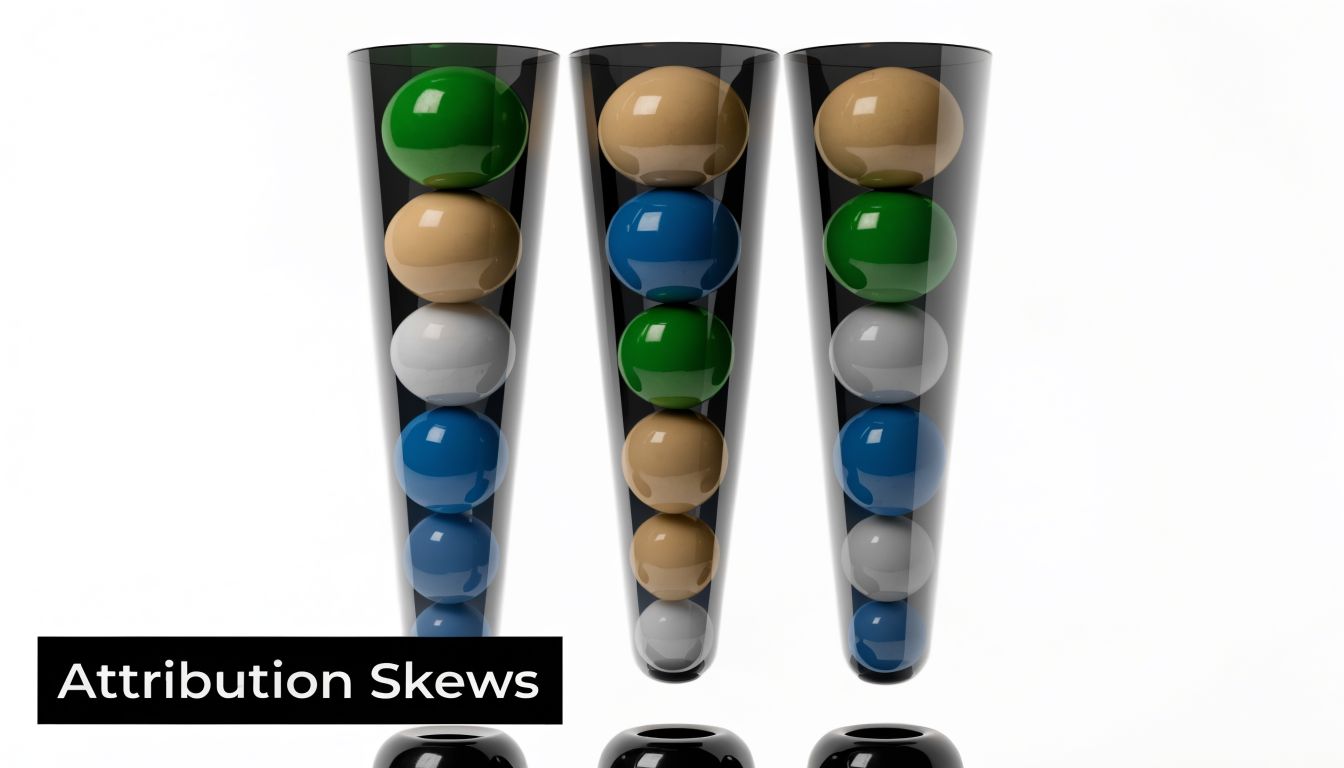
Last click is like crediting only the final pass
Think about a football drive. The team moves down the field because several players did useful work. If you give all the credit to the player who touched the ball last, you're ignoring the rest of the drive.
Attribution works the same way. A shopper might first see your ad in-feed, then visit your profile, then click a retargeting ad later, then buy after searching your brand. If you only count the last step, your earlier campaign looks weaker than it really was.
Cometly's attribution breakdown says 60% to 70% of ecommerce conversions involve three or more touchpoints, and relying on last-click attribution can lead to a 25% to 40% overestimation of single-channel CPA.
A campaign can look expensive when it's actually doing the early work that makes another campaign convert.
What to do with this as a beginner
You don't need enterprise attribution software to use this insight well. You just need to stop making snap decisions from one dashboard view.
Use a simple process:
- Check assisted behavior: If a campaign drives traffic, engagement, and returning visitors, don't kill it just because direct purchases lag.
- Compare new customer paths: Look at how people move from first touch to purchase. If retargeting closes the sale, cold traffic may still deserve part of the credit.
- Be careful with immediate cutoffs: A top-of-funnel ad often looks worse in direct CPA terms than a warm retargeting ad.
The practical lesson
The dashboard number is still useful. Just treat it like a map, not a courtroom verdict. Attribution tells you who got credit. It doesn't always tell you who created demand.
That distinction saves beginners from turning off the campaigns that feed the rest of the account.
Practical Ways to Lower Your CPA on a Small Budget
If you're working with a small daily budget, you don't have room for chaotic testing. Every bad click hurts more. Every weak creative matters more. Your edge comes from discipline, not volume.
Fix the page before you buy traffic
Most beginners try to optimize ads before they optimize the destination. That's backwards.
Before launching or relaunching, audit the product page for three things:
- Message match: The headline and opening copy should reflect the promise in the ad.
- Trust signals: Reviews, delivery clarity, returns info, and basic visual polish matter.
- Decision friction: Too much clutter, weak product explanation, or a confusing mobile layout will drag down conversion.
A mediocre ad can sometimes survive a strong page. A strong ad rarely survives a weak page.
Use a round by round testing rhythm
Small budgets need structure. I like a round-based approach because it forces clean decisions.
Round one
Launch a small set of different angles, not a pile of slightly different versions of the same ad. If you're testing a kitchen product, one ad might focus on problem to solution, another on social proof, another on UGC-style demonstration.
Round two
Keep the angle that gets the best quality response, then test a new hook or visual inside that angle. Don't rewrite everything at once or you won't know what improved.
Round three
Once one angle consistently produces the most efficient acquisition cost, test audience refinement or a landing page adjustment against it.
Beginners often “test” by changing copy, audience, image, headline, and CTA all at once. That's not testing. That's replacing one guess with another.
Field note: On a tight budget, fewer cleaner tests beat a large messy launch every time.
Cut waste where beginners usually miss it
The biggest waste points are usually predictable.
- Too many audiences at once: You spread spend so thin that nothing learns.
- Generic creative: If the ad could sell ten unrelated products, it won't carry strong intent.
- No retargeting plan: Visitors who showed interest leave and disappear instead of getting a second chance to convert.
- Judging too fast or too slowly: Panic turns off ads before they have enough signal. Hope keeps losers alive too long.
A better workflow looks like this:
- Build one clear offer.
- Create a few distinct angles.
- Send traffic to one strong page.
- Review results by angle, not by emotion.
- Keep one winner. Replace one loser. Repeat.
Creative choices that usually help
For first-time stores, the strongest creatives usually do one of these jobs well:
- Demonstrate a clear before and after
- Show the product in real use
- Answer an objection directly
- Use social proof to reduce skepticism
- Frame the product around identity or aspiration
Weak creatives usually try to look polished without saying anything persuasive. Good-looking ads can still produce bad cost per acquisition if they don't resolve doubt.
Know when to scale and when to stop
Scale only when the campaign is showing stable signs that it can hold your target economics. Pause when the numbers consistently point the wrong way and you don't have a clear hypothesis for improvement.
That means you shouldn't scale because one sale came in. You also shouldn't keep spending just because the ad got a few compliments in the comments. Base your decisions on whether the campaign is moving toward an acquisition cost your store can support.
The smaller the budget, the more important that discipline becomes.
Your CPA Optimization Checklist
A good checklist keeps you from fixing the wrong problem. Use this before you launch and while you manage the account.
Before launch
- Define the acquisition event: For a dropshipping store, that should be a purchase, not a click or add-to-cart.
- Set a true CPA target: Count all relevant costs, not just platform spend.
- Pressure-test the product page: Make sure the ad promise matches the page promise.
- Prepare multiple angles: Launch with different messaging directions, not cosmetic variants.
- Confirm tracking is working: If purchase tracking is broken, all your CPA decisions will be shaky.
After launch
- Check true CPA, not just reported CPA: Keep both numbers visible.
- Review performance by angle: This tells you which message is doing the heavy lifting.
- Separate cold and warm traffic logic: Their CPA behavior won't look the same.
- Protect budget from drift: Pause obvious losers. Refresh weak angles. Don't let dead ads keep spending.
- Scale carefully: Increase exposure only when the campaign repeatedly supports your target economics.
A short operating rule helps here:
If you can't explain why an ad is winning, you probably don't know how to scale it yet.
Weekly review questions
Use these questions every week:
- Is my true CPA still acceptable?
- Which angle is producing the best quality conversion path?
- Is the page helping the ad or wasting the click?
- Am I keeping budget on ads because they're good, or because I don't want to admit they're bad?
- If CPA worsened, did audience quality, creative quality, or page quality break first?
That kind of review keeps you from making random changes under pressure.
Cost Per Acquisition Frequently Asked Questions
How long should I wait before judging a campaign's CPA
Long enough to collect meaningful purchase behavior, but not so long that weak ads drain your budget. Don't judge from a few early clicks. Also don't let a clearly poor setup run just because you're hoping it turns around. Make decisions based on trend, not on one isolated result.
Is a high CPA ever okay
Yes. A higher CPA can still be acceptable if the customer value supports it. That's why context matters more than ego. Cheap acquisitions that don't produce margin are worse than expensive acquisitions that lead to healthy customer value.
My CPA is rising. What should I check first
Start with the obvious friction points. Look at creative fatigue, landing page quality, and whether the audience still matches the offer. If none of those changed, check whether attribution or tracking changes are making the dashboard look worse than the underlying business reality.
Should I optimize for CPA or ROAS
Use both, but let CPA keep you honest. ROAS shows revenue efficiency. CPA shows customer acquisition efficiency. If ROAS looks fine but your true acquisition cost is too heavy after hidden costs, the campaign can still be weaker than it appears.
Why does my retargeting campaign have a better CPA than my cold campaign
Because warm traffic already knows you. Retargeting often closes people that cold campaigns introduced. That's normal. Don't compare them as if they do the same job.
What's the biggest beginner mistake with cost per acquisition
Treating the in-platform number like final truth. The fundamental mistake isn't caring about CPA. It's caring about the wrong version of CPA.
If you're launching your first product and want a simpler way to plan creatives, angles, buyer profiles, and budget-aware Meta tests, Social Loop AI is built for that stage. It turns a product URL into a launch plan and ad batch so you can test faster, track cleaner, and make CPA decisions with less guesswork.